

The Deposit of Faith

Since many have undertaken to set down an orderly account of the events that have been fulfilled among us, just as they were handed on to us by those who from the beginning were eyewitnesses and servants of the word, I too decided, after investigating everything carefully from the very first, to write an orderly account for you, most excellent Theophilus, so that you may know the truth concerning the things about which you have been instructed.
Luke 1:1-4
The passage from Luke 1:1-4 serves as a foundational starting point for comprehending the Catholic concept of the Deposit of Faith. This Deposit of Faith includes both Sacred Scripture and Sacred Tradition, reflecting the belief that divine revelation is not confined solely to the written word of the Bible. In contrast, the Protestant doctrine of Sola Scriptura asserts that Scripture alone is the ultimate authority in matters of faith and practice. Luke’s introduction emphasizes the importance of eyewitness testimonies and the oral tradition that underpinned the teachings of Jesus, indicating that the early Church valued both the written accounts and the lived experiences of the apostles, as reflected in 2 Thessalonians 2:15. Understanding this context is crucial for grasping how the Catholic Church views the continuity and richness of faith as encompassing a broader scope of revelation than that represented in the Bible alone.
In Luke’s introduction to his Gospel, he emphasizes the significance of eyewitness testimony and the meticulous investigation of accounts related to the life and teachings of Jesus Christ. This emphasis aligns with the Catholic belief that the Church’s authoritative teaching stems not only from written Scripture but also from the rich oral traditions that have been faithfully transmitted since the time of the apostles. The phrase “handed on to us by those who from the beginning were eyewitnesses” serves to illuminate the vital connection and continuity of teaching directly from the apostles to subsequent generations of believers. This continuity is a fundamental aspect of what is known as the Deposit of Faith, which encompasses all the truths revealed by God and entrusted to the Church for preservation and proclamation. By grounding his narrative in the accounts of those who witnessed Jesus’ ministry firsthand, Luke establishes a solid foundation for understanding the authenticity and reliability of the message he conveys, thereby reinforcing the importance of both Scripture and Tradition in the life of the Church.

In addition to his narrative purpose, Luke’s intention to provide an “orderly account” reflects a deep respect for both historical context and the systematic transmission of faith among early Christians. This commitment underscores the importance of accurately documenting the life and teachings of Jesus, as well as the pivotal events of the early Christian Church. Catholic teaching emphasizes that Scripture transcends being a mere anthology of sacred texts; instead, it is integrally woven into a living tradition that includes ongoing interpretation and the authoritative teaching role of the Church (cf. Acts 8:30-31; Heb. 5:12). This perspective is articulated comprehensively in the Catechism of the Catholic Church, which asserts that the Church, under the guidance of the Holy Spirit, is tasked with faithfully preserving, interpreting, and communicating the Word of God throughout the ages (cf. Jn 16:12-13; 14:16). Such an understanding underscores the dynamic interplay between Scripture and Tradition, ensuring that the teachings of Jesus continue to inform and shape the faith of believers within the Church community.
In contrast, sola Scriptura—the doctrine embraced by many Protestant denominations—asserts that Scripture alone is the ultimate and exclusive authority for guiding faith and practice. This belief underscores the idea that any traditions, teachings, or interpretations originating outside of the biblical text lack the same level of authority. As a result, sola Scriptura leads to a distinct departure from the Catholic perspective, which views the interplay between Scripture and Tradition as integral to achieving a comprehensive understanding of faith. The Catholic Church holds that Sacred Tradition, alongside Sacred Scripture, is essential for conveying the fullness of truth, as it is believed to encompass teachings passed down through the apostles and their successors, thus enriching the faith experience over centuries. This difference in interpretation highlights a significant theological divide between Protestant and Catholic communities regarding the sources of divine revelation and the foundations of religious authority.
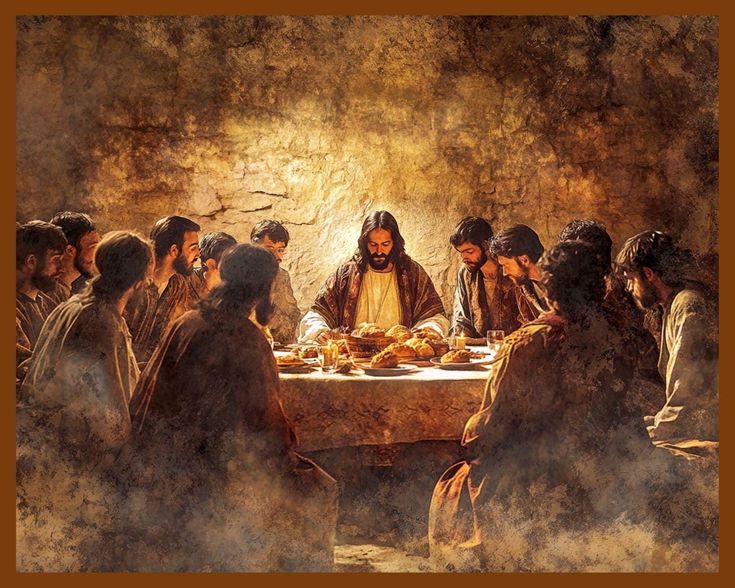
Hence, Luke’s prologue powerfully illustrates the early Church’s recognition of the essential role played by both the written word of Scripture and the oral traditions that have significantly shaped the Christian faith. This dual recognition underscores the Catholic understanding of the Deposit of Faith, which Tradition enriches—a living transmission of teachings, practices, and interpretations passed down through the generations. This contrasts sharply with the Protestant emphasis on “sola scriptura,” or Scripture alone, which often leads to a more fragmented view of God’s revelation and the further splintering of Protestantism.
By advocating for a more holistic approach that encompasses both Scripture and Tradition, the Catholic Church seeks to provide a deeper understanding of the fullness of the Christian message. This comprehensive framework is essential for understanding the continuity of faith throughout history and ensuring that the teachings of Jesus Christ and the Apostolic Fathers are faithfully preserved and understood in their entirety. Such an approach not only connects believers to their historical roots but also enriches their spiritual lives through the wisdom and insights gained from centuries of theological reflection and lived experience.

In Luke 1:1-4, the author addresses a figure named Theophilus, likely a person of high standing from Antioch who may have been a patron or a seeker of deeper understanding regarding the Christian faith. Luke emphasizes his meticulous approach to researching and presenting the events surrounding Jesus’ life and ministry in a coherent and ordered manner. This commitment to accuracy and clarity resonates deeply with the theology of Vincent of Lerins, a 5th-century Gallic monk and priest, who articulated an essential concept regarding the development of doctrine in his work, “Commonitorium.” Vincent argued for a development of doctrine that embraces the core tenets of Christian beliefs while allowing for a greater depth of comprehension and elucidation over time. He emphasized that authentic development must remain true to the original apostolic teachings, ensuring that new insights do not stray from the foundational truths established by the early Church.
Just as Luke aimed to provide a clear, comprehensive account of the Gospel’s truths through careful historical inquiry, Vincent’s perspective allows for necessary adjustments and expansions that reflect the Church’s evolving understanding in response to contemporary issues. This interplay between historical fidelity, rooted in the teachings of Christ and his apostles, and the organic growth of doctrine highlights a crucial principle present in both Luke’s writings and Vincent’s reflections on orthodoxy. Ultimately, this balance ensures that the faith is both grounded in its origins and capable of addressing the spiritual needs of successive generations.
“Those, therefore, who desert the preaching of the Church, call in question the knowledge of the holy presbyters, not taking into consideration of how much greater consequence is a religious man, even in a private station, than a blasphemous and impudent sophist. Now, such are all the heretics, and those who imagine that they have hit upon something more beyond the truth, so that by following those things already mentioned, proceeding on their way variously, in harmoniously, and foolishly, not keeping always to the same opinions with regard to the same things, as blind men are led by the blind, they shall deservedly fall into the ditch of ignorance lying in their path, ever seeking and never finding out the truth. It behooves us, therefore, to avoid their doctrines, and to take careful heed lest we suffer any injury from them; but to flee to the Church, and be brought up in her bosom, and be nourished with the Lord’s Scriptures.”
Irenaeus, Against Heresies, 5,20:2 (A.D. 180)
But in learning the Faith and in professing it, acquire and keep that only, which is now delivered to thee by the Church, and which has been built up strongly out of all the Scriptures….Take heed then, brethren, and hold fast the traditions which ye now receive, and write them and the table of your heart.”
Cyril of Jerusalem, Catechetical Lectures, 5:12 (A.D. 350)
“But beyond these [Scriptural] sayings, let us look at the very tradition, teaching and faith of the Catholic Church from the beginning, which the Lord gave, the Apostles preached, and the Fathers kept.” Athanasius, Four Letters to Serapion of Thmuis, 1:28 (A.D. 360)
“Now I accept no newer creed written for me by other men, nor do I venture to propound the outcome of my own intelligence, lest I make the words of true religion merely human words; but what I have been taught by the holy Fathers, that I announce to all who question me. In my Church the creed written by the holy Fathers in synod at Nicea is in use.”
Basil, To the Church of Antioch, Epistle 140:2 (A.D. 373)
“But it will be said, If the words, the sentiments, the promises of Scripture, are appealed to by the Devil and his disciples, of whom some are false apostles, some false prophets and false teachers, and all without exception heretics, what are Catholics and the sons of Mother Church to do? How are they to distinguish truth from falsehood in the sacred Scriptures? They must be very careful to pursue that course which, in the beginning of this Commonitory, we said that holy and learned men had commended to us, that is to say, they must interpret the sacred Canon according to the traditions of the Universal Church and in keeping with the rules of Catholic doctrine, in which Catholic and Universal Church, moreover, they must follow universality, antiquity, consent.”
Vincent of Lerins, Commonitory of the Antinquity and Universality of the Catholic Faith
70 (A.D. 434)

PAX VOBISCUM
 Catholic Scripture
Leave a comment