
JUSTIFICATION

What good is it, my brothers and sisters, if you say you have faith but do not have works? Can faith save you? If a brother or sister is naked and lacks daily food, and one of you says to them, “Go in peace; keep warm and eat your fill,” and yet you do not supply their bodily needs, what is the good of that? So faith by itself, if it has no works, is dead. But someone will say, “You have faith and I have works.” Show me your faith apart from your works, and I by my works will show you my faith.
James 2, 14-18
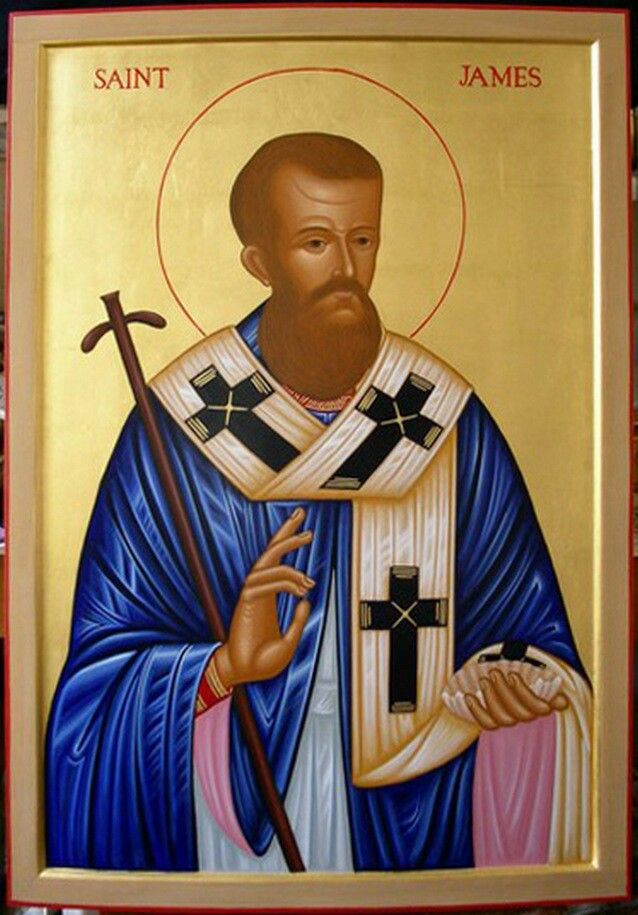
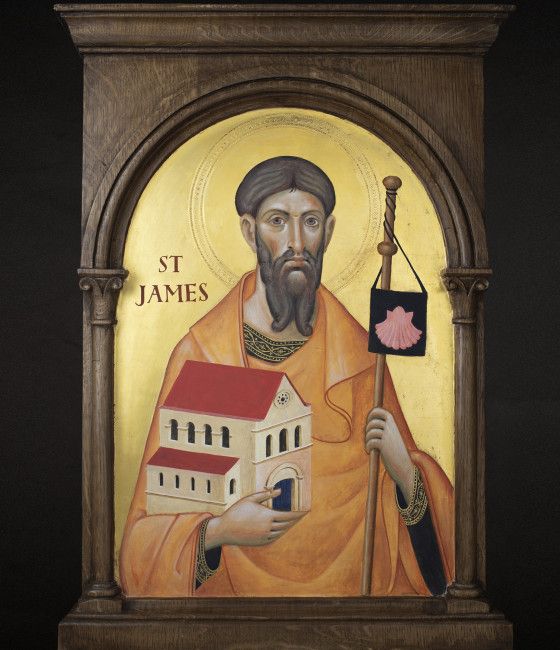
As stated in his Epistle 2:21, 24, St. James poses a rhetorical question regarding Abraham, asking, “Do you see how a man is justified by his works?” This query highlights that justification or being declared righteous by God is achieved through works that stem from grace and faith, rather than through faith alone. The passage from James 2:14-18 delves deeply into a fundamental theme of Christian theology: the critical relationship between faith and works. Traditionally attributed to the Apostle James the Lesser, who is considered a cousin of Jesus, this letter is thought to have been composed in the late first century—an era when early Christian communities were actively wrestling with the implications of Jesus’ teachings and how to embody them in their daily lives.
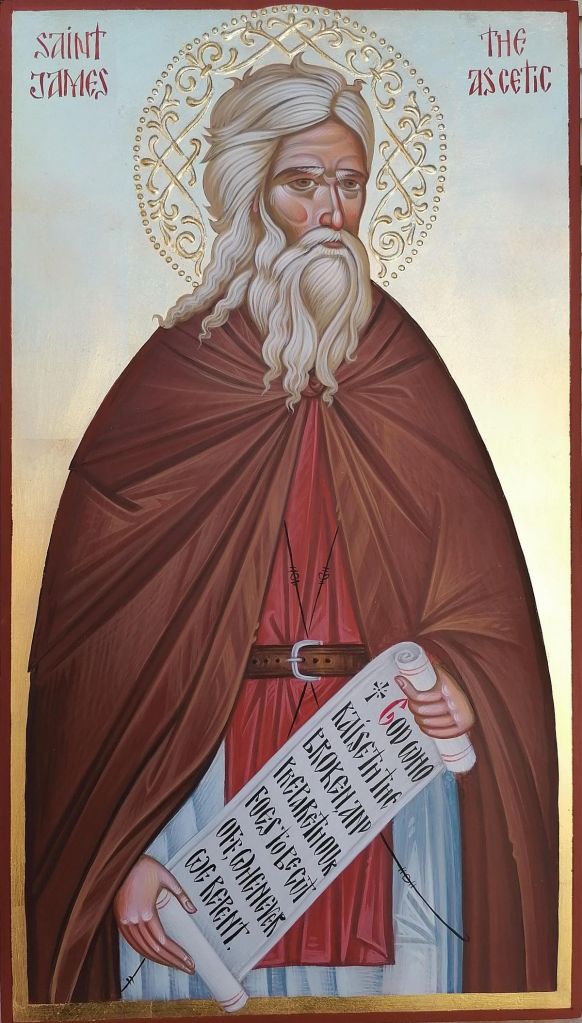
Now Bishop of Jerusalem, James is specifically addressing Jewish Christians who are dispersed outside of Palestine, as noted in James 1:1. Many of these believers were facing severe poverty and persecution, which led to a wavering of their faith. The challenges they encountered caused their spiritual fervor to diminish, resulting in a lack of compassion for the poor within their community. This shift led to various issues, including a breakdown of brotherly charity, incidents of slander and false witness, disputes and lawsuits among fellow believers, as well as the use of harsh language and neglect of prayer and worship.
James wrote his epistle with a clear moral objective. His primary aim was to encourage Jewish Christians to remain steadfast in their faith, even in the face of significant trials. He sought to console and motivate them by urging adherence to the principles of their faith, with the intention of addressing the evils and abuses that were affecting their communities. The apostle emphasized that mere belief was insufficient for salvation; he warned that without corresponding actions, their faith would ultimately be ineffective. He pointed out that the faith they embraced diverged from the teachings of Jesus and his apostles, leading to a form of belief that he characterized as “dead” and “useless” (referenced in James 2:17, 20). He argued that faith alone, without accompanying works, would not bring about righteousness, noting that even the demons acknowledged God’s existence (James 2:19). In essence, James called for an alive and active faith, one that aligned beliefs with actions to truly reflect their commitment to Christian teachings.
James makes a profound statement when he asserts that “faith by itself, if it has no works, is dead.” This declaration resonates deeply within Catholic teaching, asserting that true faith is not merely an intellectual assent but must manifest itself through actions that align with the teachings of Christ. For Catholics, grace serves as the foundation of salvation, but they also believe that human cooperation, expressed through good works, plays an essential role in that process. This belief is particularly evident in the Catholic sacraments, which are understood not only as rituals of faith but also as vital channels of divine grace, reinforcing the necessity of both faith and action.
Furthermore, the passage challenges believers to critically examine their responsibilities toward their fellow human beings. James prompts Christians to reflect on the ethical implications of their faith, emphasizing the importance of concrete actions undertaken in support of those in suffering or in need. The rhetorical question he poses—what good is it to wish someone well without providing for their needs? —serves as a stark reminder that true faith is demonstrated not just through words but through committed action. This challenge compels believers to live out their faith actively by serving others, thereby tangibly embodying the love of Christ.
James 2:18 emphasizes the connection between faith and actions in the statement “Demonstrate your faith to me without works, and I will demonstrate my faith to you from my works.” This verse presents a dialogue in which one person claims to have faith, while another claims to have works. The implication is that faith should be demonstrated through actions; it’s not enough to believe. The speaker suggests that true faith is validated by one’s actions, indicating that both faith and works are essential components of genuine belief. This reflects the broader theme in James about the importance of living out one’s faith through practical deeds.
James 2:22 (You see that faith was active along with his works, and faith was brought to completion by the works.) underscores the idea that Abraham’s faith and actions worked together in harmony. It asserts that faith is active alongside works and that faith is made complete by those works. Essentially, this verse highlights that genuine faith is not passive; it is demonstrated and brought to fulfillment through the actions one takes. In this way, faith is affirmed and strengthened by the deeds performed, emphasizing that both elements are essential for a true expression of belief that justifies the soul in the sight of God.
James draws a striking comparison between idle faith and a lifeless body. He asserts that just as a body requires a soul or spirit to be animated, faith also remains lifeless and inactive without the presence of charity and grace. Charity, much like the soul, is essential and intrinsic to faith; neither is merely an attribute of the other. Humans are understood as a composite of both soul and body, paralleling the relationship between faith and charity as integral components of a justified individual. It’s important to note that James is not addressing individuals who merely think they possess faith without actually having it, a perspective often held by some Protestant interpretations. His analogy implies that a body, while it can exist physically, is devoid of life without its soul. Similarly, faith without charity is akin to existing in a ‘dead’ state, lacking the vivifying element needed for true spiritual life.
James emphasizes that faith and charity are distinct but operate in conjunction to complete the process of justification for the believer. Justification is a composite of faith and good works – faith informed by charity. This journey commences with faith and reaches fulfillment only when it is enlivened with charity (agape) and grace. In a parallel manner, human existence begins with conception in the womb and is fully realized through the infusion of the soul, which is bestowed by God’s grace.
The Epistle of James emphasizes that faith alone is insufficient for salvation without the accompanying action of good works, particularly those grounded in charity and grace. It points out that failing to perform good works when necessary constitutes a sin of omission, as noted in James 4:17. A person cannot be just and truly saved while remaining in a state of grave sin. Furthermore, a soul that lacks charity is also deprived of sanctifying grace, which is essential for justifying a person before God. Merely having a charitable disposition is not enough; one must also take action. Understanding and accepting the right course of action without following through, as illustrated in James 2:15-16, does not fulfill the requirement of justification. Believers are called to be both “hearers” and “doers” of the word of God, similarly to Abraham, who is recognized as just in the eyes of God, as stated in James 1:22: But be doers of the word, and not merely hearers who deceive themselves.
Thus, James 2:14-18 serves as a poignant reminder of the profound interconnectedness of faith and works within the Christian life, especially in the context of Catholic teaching. It highlights the imperative for believers to animate their faith through loving actions that exemplify Christ’s commands, urging them to engage fully in a life of service and compassion towards others as an authentic expression of their religious convictions. The passage invites Christians not only to profess their faith but also to embody it in all aspects of life, thereby creating a harmonious relationship between belief and action.
“Seeing, therefore, that we are the portion of the Holy One, let us do all those things that pertain to holiness, avoiding all evil-speaking, all abominable and impure embraces, together with all drunkenness, seeking after change, all abominable lusts, detestable adultery, and execrable pride … Let us cleave, then, to those to whom grace has been given by God. Let us clothe ourselves with concord and humility, ever exercising self-control, standing far off from whispering and evil-speaking, being justified by our works, and not our words.”
St. (Pope) Clement 1 of Rome (A.D. 98)
Epistle to the Corinthians 30
“But He who raised Him up from the dead will raise up us also, if we do His will, and walk in His commandments, and love what He loved, keeping ourselves from all unrighteousness, covetousness, love of money, evil speaking, false witness; ‘not rendering evil for evil, or railing for railing,’ or blow for blow, or cursing for cursing, but being mindful of what the Lord said in His teaching: ‘Judge not, that ye be not judged; forgive, and it shall be forgiven unto you; be merciful, that ye may obtain mercy; with what measure ye mete, it shall be measured to you again; and once more, “Blessed are the poor, and those that are persecuted for righteousness’ sake, for theirs is the kingdom of God.’”
St. Polycarp of Smyrnaea (A.D. 135)
To the Philippians, 2
“‘And other sheep there are also,’ saith the Lord, ‘which are not of this fold ‘–deemed worthy of another fold and mansion, in proportion to their faith. ‘But My sheep hear My voice,’ understanding gnostically the commandments. And this is to be taken in a generous and worthy acceptation, along with also the recompense and accompaniment of works. So that when we hear, ‘Thy faith hath saved thee, we do not understand Him to say absolutely that those who have believed in any way whatever shall be saved, unless also works follow. But it was to the Jews alone that He spoke this utterance, who kept the law and lived blamelessly, who wanted only faith in the Lord. No one, then, can be a believer and at the same time be licentious; but though he quit the flesh, he must put off the passions, so as to be capable of reaching his own mansion.”
St. Clement of Alexandria (A.D. 202)
The Stromata, 6:14

PAX VOBISCUM
 Catholic Scripture
Leave a comment