

OBJECTIVE & SUBJECTIVE REDEMPTION
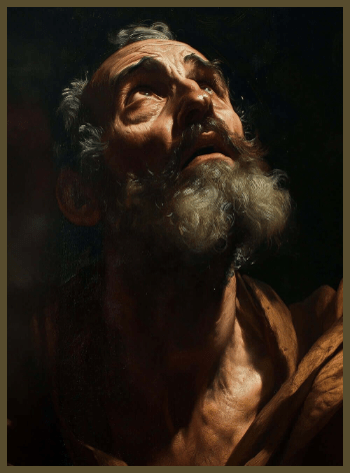
I am now rejoicing in my sufferings for your sake, and in my flesh, I am completing what is lacking in Christ’s afflictions for the sake of his body, that is, the church. I became its servant according to God’s commission that was given to me for you, to make the word of God fully known, … For this I toil and struggle with all the energy that he powerfully inspires within me.
Colossians 1, 24-25, 29
The Catholic teaching on subjective redemption pertains to the personal application of Christ’s objective redemption to individual believers. This concept emphasizes that while Christ’s sacrifice on the cross is universally valid and offers salvation to all humanity—an understanding known as objective redemption—each individual must personally accept and respond to this gift through faith and the sacraments.
To fully grasp this teaching, one must consider both aspects of redemption in relation to Catholic theology. Objective redemption refers to the historical act of salvation initiated by Jesus through his crucifixion and resurrection, which offers a pathway to eternal life for all. In contrast, subjective redemption focuses on the individual’s acceptance of this grace and transformative power in their own life. This acceptance is often manifested through personal faith, participation in the sacraments (such as baptism and Eucharist), and an ongoing relationship with God.
The interplay between these two dimensions of redemption reveals the Catholic understanding of salvation as both a divine gift and a personal commitment. Emphasis is placed on the necessity of cooperation with God’s grace—meaning that salvation is not merely a passive gift but an active participation in the life of faith (cf. Phil 2:12). This holistic view highlights the significance of community and the Church in guiding individual believers’ journeys toward salvation.
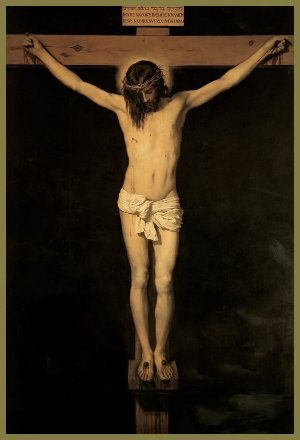
Diego Velázquez- Christ Crucified
Objective redemption, therefore, refers to the salvific act accomplished by Jesus Christ through His perfect life, sacrificial death, and triumphant resurrection. The term ‘objective’ is significant because it highlights that this redemption is not limited to a select few individuals, but pertains to the entire human race —a monumental and historical event that transpired once and for all in the context of salvation history.
According to Catholic doctrine, Christ’s sacrifice is not only sufficient but also necessary for the redemption of all people, transcending time and place. His atoning death—represented in the Eucharist—offers humanity the possibility of salvation and reconciliation with God, thereby overcoming the devastating consequences of original sin. This act of redemption is viewed as a divine initiative, where God, out of love and mercy, intervenes in human history to restore the broken relationship between Himself and humanity. Through this grace, believers are invited to respond with faith and cooperation, participating in the transformative effects of Christ’s redemptive work.
In contrast, subjective redemption involves the personal acceptance and application of the objective redemption offered through Christ’s sacrifice in each individual’s life. This process underscores the importance of personal faith, active participation, and cooperation with God’s grace as essential elements for salvation. The Church teaches that while Christ’s redemptive work is universally available to all humanity, individuals must take a personal stance and respond to God’s grace to experience the full transformative benefits of salvation. This response is integral and manifests itself through acts of faith, sincere repentance for sin, and the reception of the sacraments, such as baptism, confession, and the Eucharist. Each of these elements plays a vital role in nurturing one’s spiritual journey and deepening one’s relationship with God, enabling the faithful to internalize the salvific grace bestowed upon them.
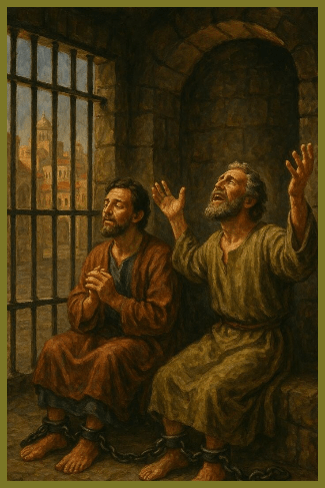
Silas & Paul in Prison
The concept of objective redemption serves as the foundational basis for subjective redemption. This means that the redemptive work of Christ, particularly His sacrificial death and resurrection, is essential for personal salvation. Without the historical and theological significance of Christ’s salvific actions, which include His atonement for sin and the offering of grace, the possibility of individual redemption would be inconceivable. It is through acknowledging the universal implications of Christ’s actions that one can fully experience and embrace their own personal journey of redemption and transformation.
While objective redemption is universally valid, meaning it applies to all humankind as a result of Christ’s sacrifice, subjective redemption necessitates a personal response from each individual. This personal engagement encompasses elements such as faith, which involves trusting in God and accepting His grace, alongside good works that reflect this faith in real-life actions, promoting charity, justice, and compassion. Additionally, participation in the sacraments is fundamental to subjective redemption, with baptism being particularly significant. Catholics believe that baptism not only washes away the stain of original sin but also initiates an individual into the life of grace, marking the beginning of their journey in faith as members of the Church. Through these acts, individuals actively embrace their redemption and deepen their relationship with God.
Grace plays a crucial role in both types of redemption, objective and subjective. The Church teaches that God freely offers His grace to all humankind, creating an invitation for individuals to respond in faith and obedience. This divine grace is not merely a passive gift; it actively empowers individuals, enabling them to overcome sin and resist temptation. Furthermore, grace is essential for the ongoing processes of conversion and sanctification. Conversion involves a transformative turning away from sin and a sincere return to God, while sanctification refers to the gradual process of becoming holy and aligning one’s life with the divine will. Together, these aspects of subjective redemption are deeply intertwined with God’s grace, highlighting its importance in the journey of personal spiritual growth and renewal.
Thus, the ultimate goal of both objective and subjective redemption is the restoration of the relationship between God and humanity, a relationship that has often been marred by sin and separation. Objective redemption refers to the foundational work accomplished through Christ’s atonement, establishing the possibility for redemption by addressing the consequences of sin and satisfying divine justice. This objective reality made it possible for humanity to be reconciled with God.
On the other hand, subjective redemption focuses on the individual’s experience of this reconciliation, emphasizing the necessity of personal faith and repentance for the actualization of that possibility in individual lives. It is through this subjective process that individuals embrace the grace offered, allowing for a transformative relationship with God that impacts their thoughts, actions, and ultimate purpose in life. Together, these two aspects of redemption highlight both the comprehensive plan of salvation initiated by God and the personal response required from each believer.
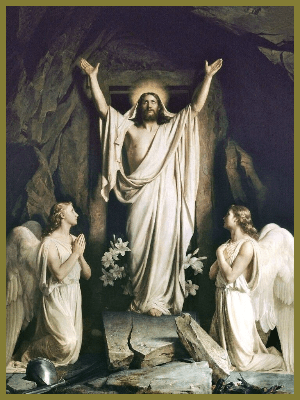
Carl Heinrich Bloch- The Resurrection
The passage from Colossians 1:24 highlights a profound theological concept that resonates deeply within Catholic theology, particularly when exploring the notions of objective and subjective redemption.
As we have seen, Objective Redemption refers to the belief that Christ’s sacrifice is universally applicable to all humanity. This act of redemption is grounded in the objective reality of what Jesus accomplished through His death and resurrection. In Colossians 1:24, when Paul speaks of “completing what is lacking in Christ’s afflictions,” it suggests that while Christ’s sacrifice was wholly sufficient, there is a continuous aspect of suffering and commitment involved in the life of believers. This does not imply any deficiency in Christ’s redemptive act, but rather emphasizes that believers participate in Christ’s suffering as a means of living out the effects of that redemption in the world.
Subjective Redemption, on the other hand, is concerned with the personal acceptance and internalization of that redemptive grace. It involves an individual’s response to God’s call and the transformative power of grace in their life. Paul’s rejoicing in his sufferings can be seen as an embodiment of subjective redemption. He accepts his role within the body of Christ (the Church) and actively participates in the redemptive work of Christ by embracing his own sufferings for the sake of others. This acceptance illustrates the personal, experiential aspect of faith where an individual grows in grace and holiness by sharing in Christ’s passion.
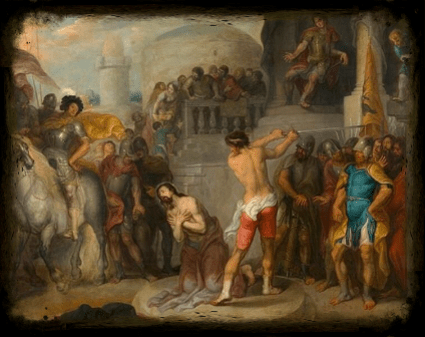
Simon de Vos – The Beheading of St. Paul
In the Catholic understanding, both dimensions are interconnected. Objective redemption provides the foundation through Christ’s ultimate sacrifice, while subjective redemption is realized in the believer’s participation in that mystery, including their own trials and sufferings. Paul’s words echo the Catholic belief that suffering can have redemptive value when united with Christ’s suffering, reinforcing the idea that believers are called to partake in this divine drama, contributing to the ongoing mission of the Church (cf. 2 Tim 2:12).
Ultimately, Colossians 1:24 serves as a reminder of the invitation for believers to share in Christ’s mission, highlighting the communal aspect of salvation and the belief that every suffering endured in love has both a transformative effect on the individual and a broader significance for the Church as the body of Christ. This ties back to the larger narrative of redemption, which is both objective in Christ’s sacrifice and subjective in the lived experience of faith, community, and personal growth in holiness.
“Now I beseech thee, by the grace with which thou art clothed, to add [speed] to thy course, and that thou ever pray for all men that they may be saved, and that thou demand things which are befitting, with all assiduity both of the flesh and spirit. Be studious of unity, than which nothing is more precious. Bear with all men, even as our Lord beareth with thee. Show patience with all men in love, as [indeed] thou doest. Be steadfast in prayer. Ask for more understanding than that which thou [already] hast. Be watchful, as possessing a spirit which sleepeth not. Speak with every man according to the will of God. Bear the infirmities of all men as a perfect athlete; for where the labour is great, the gain is also great.”
St. Ignatius of Antioch, Bishop & Martyr (c. A.D. 110)
To Polycarp, 1
“But He who raised Him up from the dead will raise up us also, if we do His will, and walk in His commandments, and love what He loved, keeping ourselves from all unrighteousness, covetousness, love of money, evil speaking, falsewitness; ‘not rendering evil for evil, or railing for railing,’ or blow for blow, or cursing for cursing, but being mindful of what the Lord said in His teaching: ‘Judge not, that ye be not judged; forgive, and it shall be forgiven unto you; be merciful, that ye may obtain mercy; with what measure ye mete, it shall be measured to you again; and once more, “Blessed are the poor, and those that are persecuted for righteousness’
sake, for theirs is the kingdom of God.’”
St. Polycarp, Bishop & Martyr (A.D. 135)
To the Philippians, 2
“We have learned from the prophets, and we hold it to be true, that punishments, and chastisements, and good rewards, are rendered according to the merit of each man’s actions. Since if it be not so, but all things happen by fate, neither is anything at all in our own power… But this we assert is inevitable fate, that they who choose the good have worthy rewards, and they who choose the opposite have their merited awards. For not like other things, as trees and quadrupeds, which cannot act by choice, did God make man: for neither would he be worthy of reward or praise did he not of himself choose the good, but were created for this end; nor, if he were evil, would he be worthy of punishment, not being evil of himself, but being able to be nothing else than what he was made.”
St. Justin the Philosopher and Martyr (A.D. 155)
First Apology, 6
“On this account also Paul the Apostle says to the Corinthians, ‘Know ye not, that they who run in a racecourse, do all indeed run, but one receiveth the prize? So run, that ye may obtain. Every one also who engages in the contest is temperate in all things: now these men that they may obtain a corruptible crown, but we an incorruptible. But I so run, not as uncertainty; I fight, not as One beating the air; but I make my body livid, and bring it into subjection, lest by any means, when preaching to others, I may myself be rendered a castaway.’ This able wrestler, therefore, exhorts us to the struggle for immortality, that we may be crowned, and may deem the crown precious, namely, that which is acquired by our struggle, but which does not encircle us of its own accord (sed non ultro coalitam).”
St. Irenaeus, Bishop & Martyr (inter A.D 180-189)
Against Heresies, 4:7

PAX VOBISCUM
 Catholic Scripture
Leave a comment