Blasphemy Against the Holy Spirit
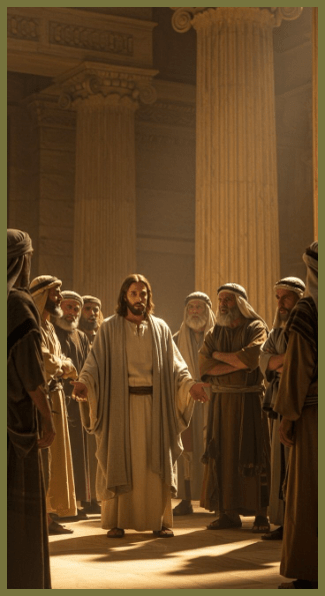
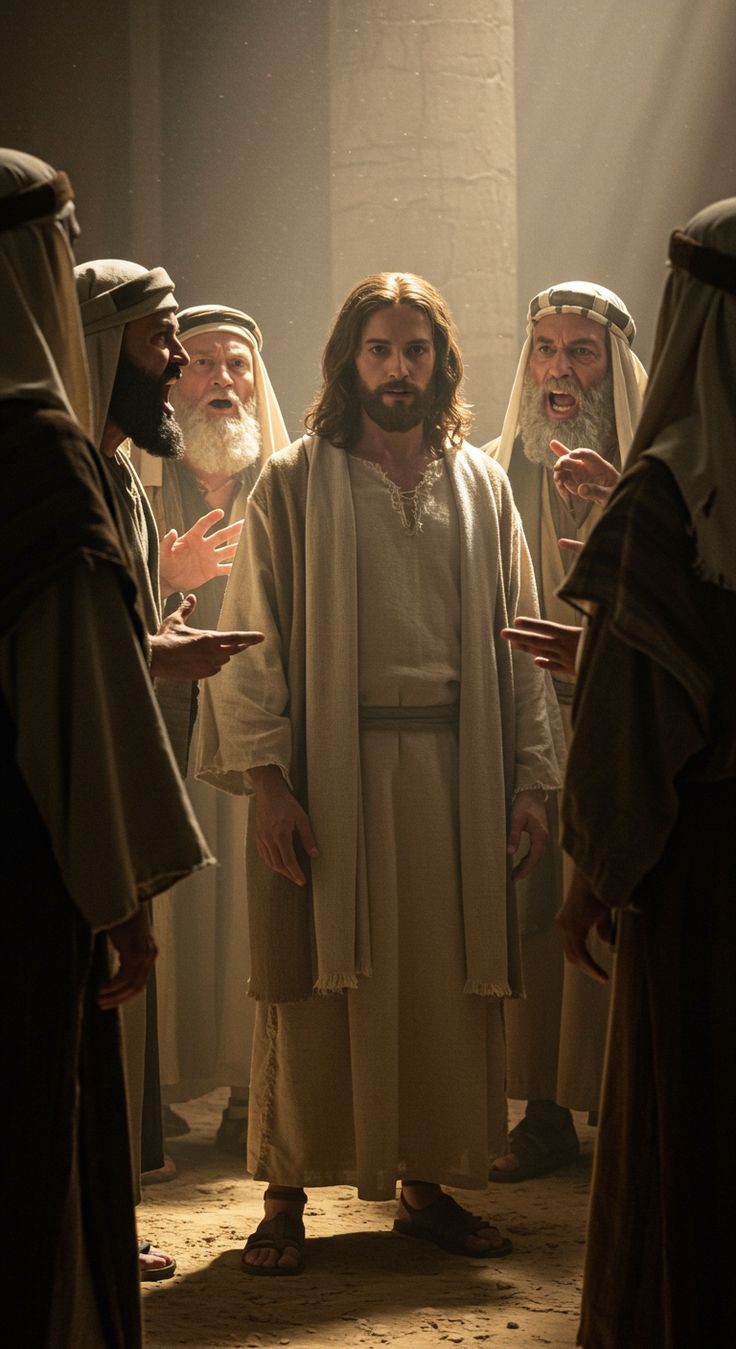
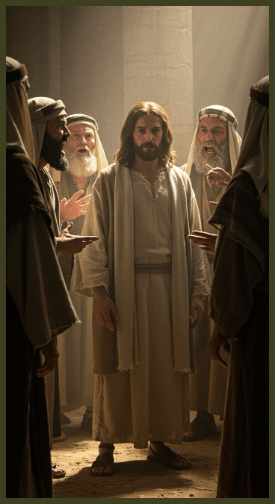
Summoning them, he began to speak to them in parables, “How can Satan drive out Satan? If a kingdom is divided against itself, that kingdom cannot stand. And if a house is divided against itself, that house will not be able to stand. And if Satan has risen up against himself and is divided, he cannot stand; that is the end of him. But no one can enter a strong man’s house to plunder his property unless he first ties up the strong man. Then he can plunder his house. Amen, I say to you, all sins and all blasphemies that people utter will be forgiven them. But whoever blasphemes against the holy Spirit* will never have forgiveness but is guilty of an everlasting sin.” For they had said, “He has an unclean spirit.”
Mark 3:23-30.
The passage from Mark 3:23-30 is part of a larger narrative that illustrates the authority of Jesus and the growing tension between him and religious leaders of his time. To understand this text fully, we can explore its historical and cultural context. The setting is first-century Judea, under Roman occupation. Jewish society was structured around religious laws and customs, and there was significant anxiety about political and spiritual integrity. Many Jews were looking for a Messiah who would liberate them from Roman rule, and any challenge to the established religious authority was met with suspicion and hostility. Jesus often used parables as a teaching method. They were stories that conveyed complex spiritual truths using everyday experiences. In this context, Jesus is addressing a crowd that includes his disciples and critics. His parables often aimed to reveal the nature of God’s kingdom and expose the hypocrisy of the religious leaders.
The passage follows a series of events where Jesus performed miracles, particularly healings, which led to accusations from the Pharisees that he was possessed by an unclean spirit. This accusation illustrates the conflict between Jesus and the religious authorities. They viewed his activities as a threat to their power and authority. The “strong man” represents Satan, and the idea of binding the strong man serves as a metaphor for overcoming evil forces. In the Jewish understanding, a “strong man’s house” symbolizes a realm of evil that Jesus is actively confronting through his ministry. This imagery reflects the belief in spiritual warfare, where divine authority is exercised to defeat evil.
This passage introduces the concept of blasphemy against the Holy Spirit, which is depicted as an unforgivable sin. The context suggests that this blasphemy is tied to the rejection of Jesus’s divine authority and power. It indicates a hardening of one’s heart against God’s work, especially as it is manifested through Jesus. This line serves as a warning against attributing God’s actions to evil, emphasizing the seriousness of recognizing and accepting the divine. Jesus’s ministry threatened the established religious order. By suggesting that a divided kingdom cannot stand, he critiques the Jewish religious leaders who were opposing him. The statement reflects an internal conflict within the religious establishment and highlights the radical nature of his message.
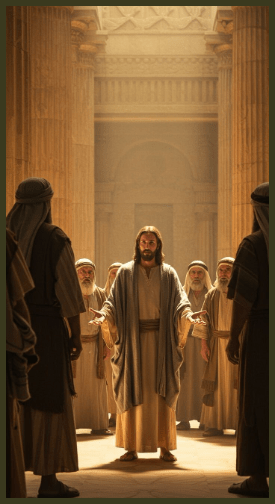
Hence, Jesus initiates His response to accusations of operating through demonic power by employing parables, which serve as illustrative stories that convey deeper truths. He articulates the idea that “a divided kingdom cannot stand,” highlighting the logical inconsistency in claiming that His miracles of healing and deliverance are fueled by Satanic influence. This assertion is profound; it emphasizes that if Jesus were indeed serving the interests of evil, His actions to restore health and liberate the afflicted would ultimately undermine Satan’s dominion, making His mission self-defeating.
In this discourse, Jesus underscores the principle that authentic unity and strength are derived from the Holy Spirit, who actively empowers His ministry. The implication here is clear: real spiritual authority and miraculous works flow from divine empowerment rather than demonic assistance, reinforcing His identity as the Son of God. Through this argument, Jesus not only defends His mission but also invites listeners to reconsider the source of true power and the nature of His divine authority.
The analogy of the strong man serves to represent Satan, illustrating the spiritual stronghold he maintains over humanity. This stronghold can only be breached if he is decisively overpowered. The implication here is that Jesus, through His earthly ministry, is actively binding the strong man, symbolizing His authority over evil forces. By doing so, He liberates individuals from the grasp of sin and oppression that Satan wields. This narrative underscores not only the divine authority of Jesus but also highlights the transformative power of the Holy Spirit, which works through Him in His mission of salvation. The act of binding the strong man reflects Jesus’ victory over evil and provides a pathway for believers to experience freedom and healing in their lives, reinforcing the central theme of redemption in Christian theology.
When Jesus speaks of blaspheming against the Holy Spirit, He refers to a grave spiritual reality that goes beyond mere verbal offense. In Catholic theology, the Holy Spirit embodies God’s active and dynamic presence in the world, serving as the guiding force in the lives of believers, sanctifying them, and revealing profound truths necessary for salvation. Blaspheming against the Holy Spirit involves a willful and definitive rejection of this divine influence and grace. It represents a conscious choice to turn away from God’s truth, effectively closing oneself off from the possibility of repentance and forgiveness. This act signifies a hardened heart that resists the workings of the Spirit, thus placing one in a perilous position concerning their relationship with God and the promise of redemption. The implications of such a stance are serious, as it reflects an ultimate refusal of the very means through which grace and truth are communicated and experienced.
The Catechism of the Catholic Church elaborates on the concept of blasphemy against the Holy Spirit, emphasizing that this grave sin originates from a hardened heart, which is a metaphorical expression for a soul that persistently turns away from divine truth and grace. This condition is not simply the result of a singular thought or utterance of blasphemy but signifies a chronic state of willful opposition and rebellion against the work of the Holy Spirit. It involves a conscious and deliberate refusal to accept God’s grace, mercy, and forgiveness, ultimately reflecting an individual’s complete rejection of the salvific power of God’s love (CCC 1864). In this context, the sin represents a profound spiritual peril, as it undermines one’s relationship with God and blocks the path to redemption.
The message conveys a stern warning about the seriousness of one’s relationship with the Holy Spirit, emphasizing its critical role in the spiritual journey of Catholics. This relationship is not merely a passive experience; it requires an active engagement and openness to God’s grace, which flows through the Holy Spirit. The text highlights the necessity of sincere repentance as a means to align oneself with divine mercy. Importantly, it asserts that even the gravest sins can be forgiven through God’s boundless love, provided that the individual does not willfully choose to reject the Holy Spirit—the very source of that forgiveness. This rejection can lead to a state of spiritual desolation, underscoring the gravity of maintaining a vibrant and responsive connection with God’s presence in one’s life.
But the Holy Spirit does not speak His own things, but those of Christ, and that not from himself, but from the Lord; even as the Lord also announced to us the things that He received from the Father. For, says He, “the word which ye hear is not Mine, but the Father’s, who sent Me.” And says He of the Holy Spirit, “He shall not speak of Himself, but whatsoever things He shall hear from Me.” And He says of Himself to the Father, “I have,” says He, “glorified Thee upon the earth; I have finished the work which, Thou gavest Me; I have manifested Thy name to men.” And of the Holy Ghost, “He shall glorify Me, for He receives of Mine.”
The Epistle of Ignatius of Antioch to the Ephesians Chapter IX (A.D. 107)
“Others, in order to suppress the gift of the Spirit which ”in latter times, according as it has pleased the Father” has been poured out upon the human race, do not [accept the gospel of John] in which the Lord promised that the would send the Paraclete; but they reject . . . the prophetic spirit. . . . [and,] because they do not wish to admit false prophets, [they] would drive out the grace of prophecy even from the Church. . . . It goes without saying that these same spirits no longer accepted St. Paul. For in his first epistle to the Corinthians he spoke in detail of the prophetic gifts . . . Thus, by their whole attitude they sin against the Spirit of God and fall into the unforgivable sin.”
Irenaeus, Against Heresies 3.11 (inter A.D. 180-189)
“We agree that the cases where penance is required are sins. These we divide according to two issues: some will be remissible, others irremissible. Accordingly, no one doubts that some deserve correction, others condemnation. Either pardon or punishment balances the account of every sin, pardon after correction, punishment after condemnation. With reference to this distinction we have already premised certain scriptural antitheses, some retaining, others forgiving sins. But John will also teach us: If anyone know that his brother sins a sin which is not unto death, he shall pray and life will be given him because he sins not unto death. This will be remissible. There is a sin unto death; not for this do I say that anyone should pray. This will be irremissible. Accordingly, where there is room for prayer there also is room for remission.”
Tertullian, On Purity and Modesty (Early 3rd Century)
PAX VOBISCUM
 Catholic Scripture
Leave a comment