
SALVATION
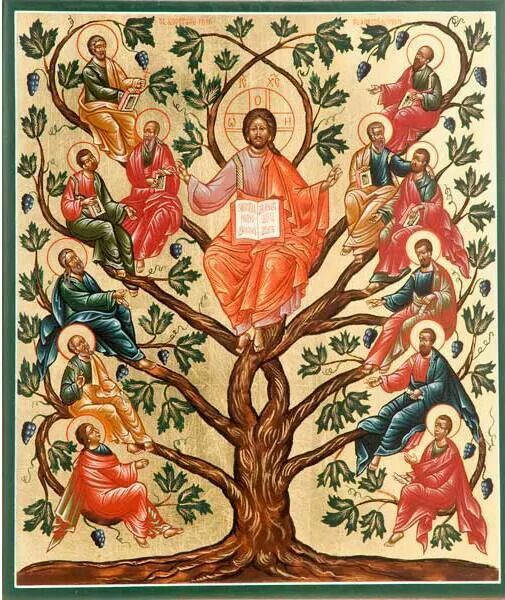
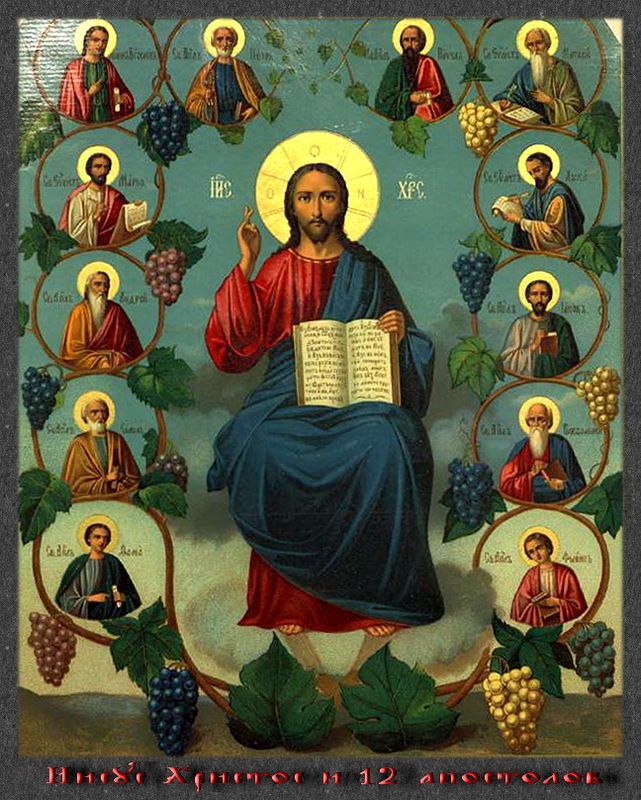
“I am the true vine, and my Father is the vine grower. He removes every branch in me that bears no fruit. Every branch that bears fruit, he prunes to make it bear more fruit. You have already been cleansed by the word that I have spoken to you. Abide in me as I abide in you. Just as the branch cannot bear fruit by itself unless it abides in the vine, neither can you unless you abide in me. I am the vine; you are the branches. Those who abide in me and I in them bear much fruit, because apart from me you can do nothing. Whoever does not abide in me is thrown away like a branch and withers; such branches are gathered, thrown into the fire, and burned. If you abide in me, and my words abide in you, ask for whatever you wish, and it will be done for you. My Father is glorified by this, that you bear much fruit and become my disciples. As the Father has loved me, so I have loved you; abide in my love. If you keep my commandments, you will abide in my love, just as I have kept my Father’s commandments and abide in his love. I have said these things to you so that my joy may be in you, and that your joy may be complete.
John 15:1-11
“Watch for your life’s sake. Let not your lamps be quenched, nor your loins unloosed; but be ye ready, for ye know not the hour in which our Lord cometh. But often shall ye come together, seeking the things which are befitting to your souls: for the whole time of your faith will not profit you, if ye be not made perfect in the last time.”
Didache, 16 (A.D. 90)
The passage from John 15:1-11 presents a metaphorical depiction of the relationship between Jesus (the vine), God the Father (the vine grower), and believers (the branches). When examining this text within the context of Catholic soteriology, it highlights key differences from the Protestant concept of “once saved, always saved” or eternal security.
In Catholic teaching, salvation is not regarded as a singular event achieved through a one-time act of faith; rather, it is understood as a lifelong journey that necessitates continuous engagement with God’s grace. This ongoing process is deeply rooted in the relationship believers cultivate with Christ, aptly illustrated through the imagery of the vine and branches found in John 15:1-5. Here, Christ is depicted as the true vine, and believers as the branches; this metaphor underscores the vital importance of staying connected to Him in order to bear the fruits of faith, love, and good works.
This connection to Christ is nurtured and strengthened through the sacraments, particularly the Eucharist, also known as Holy Communion. Catholics believe that the Eucharist is not merely a symbolic act, but a true sacramental participation in the body and blood of Christ. Through this sacrament, grace is imparted, which is essential for spiritual growth, sustenance, and perseverance in faith. Regular participation in the Eucharist, along with other sacraments, prayer, and community life, is considered essential for fostering a deep, personal relationship with God and for ongoing conversion of the heart. In this view, salvation is a dynamic process that calls for constant commitment and active participation in the life of the Church, as one continually seeks to grow in holiness and grace.
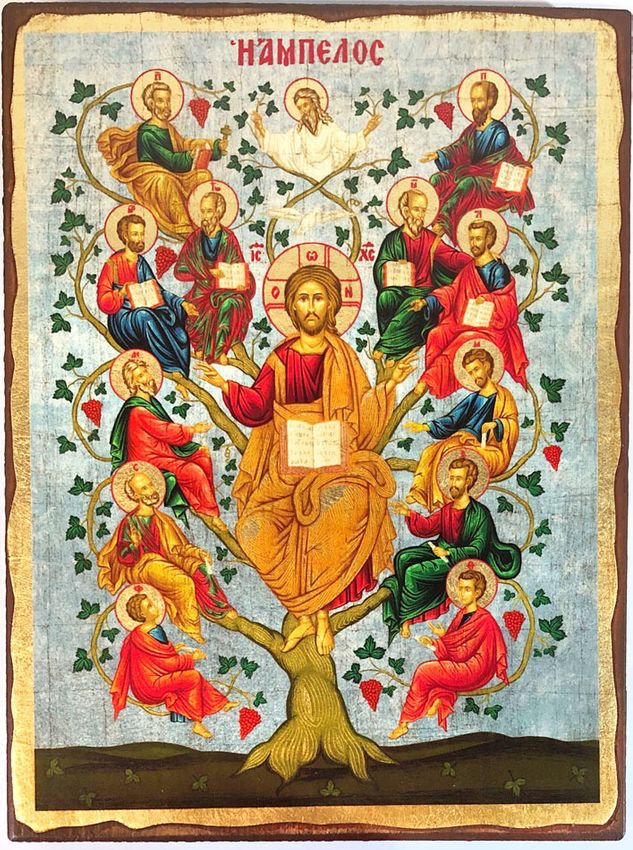
The passage emphasizes the essential role of cooperation with God’s grace in the journey of faith. It articulates the idea that those who bear fruit through their efforts in faith are subject to a divine pruning process, allowing them to become even more fruitful in their spiritual lives. This notion resonates deeply with Catholic doctrine, which teaches that sanctification—the transformative process of becoming holy—requires a collaborative effort between divine grace and human action.
Catholics hold that each individual is called to live their faith actively, which involves not only belief but also the practice of virtues that reflect Christ’s love. To remain intimately connected to the vine, which represents Christ, believers must continually strive to abide in His love, prayerfully seeking guidance and strength. This relationship is further developed through the observance of His commandments, as Jesus Himself stated, “If you love me, you will keep my commandments” (Jn 14:15). Therefore, the Catholic understanding underscores the harmonious interaction of faith and works, illustrating that while grace is freely given, it necessitates a human response characterized by commitment, moral responsibility, and active participation in the life of the Church and its sacramental practices.
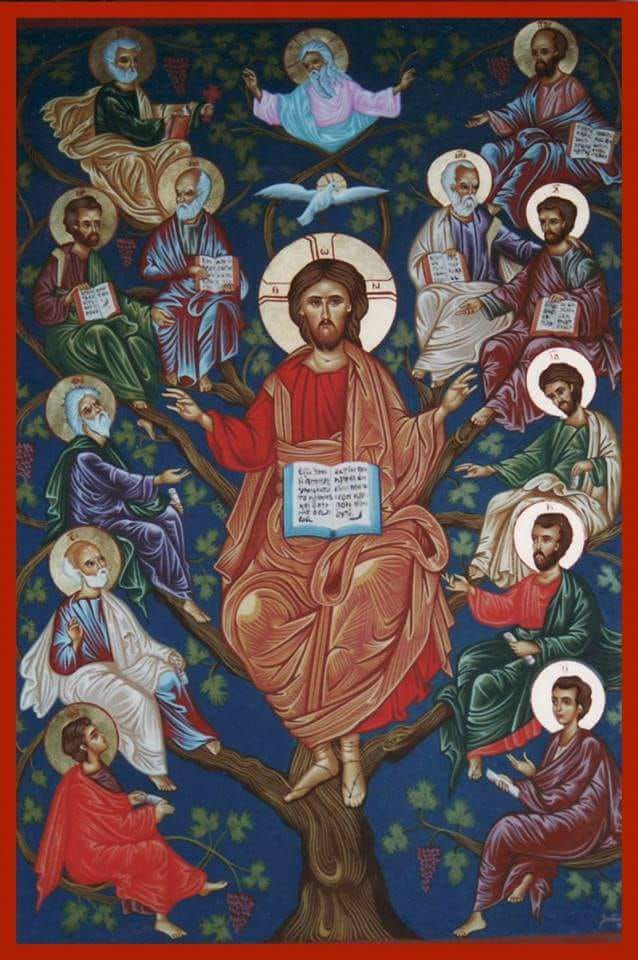
The Catholic understanding of salvation encompasses an element of conditional assurance, emphasizing the interplay between divine grace and human free will. While God extends the offer of salvation freely to all, it is incumbent upon individuals to respond appropriately through faith and good works, as articulated in the Catechism of the Catholic Church. This response includes adhering to the sacraments, participating in the life of the Church, and striving to live a moral life in accordance with God’s commandments.
The biblical warning about branches that wither and are cut off—drawn from passages like John 15:6—serves as a poignant reminder that a believer can indeed fall away from grace if they neglect to nurture their relationship with Christ through prayer, the sacraments, and acts of charity. This perspective emphasizes the importance of perseverance in faith, as salvation is viewed not as a one-time event but as an ongoing journey that demands commitment and vigilance.
In stark contrast, many Protestant denominations advocate the doctrine of eternal security, commonly summarized by the phrase “once saved, always saved.” This belief asserts that once an individual genuinely accepts Jesus Christ as their Savior through a heartfelt act of faith and repentance, they cannot lose their salvation, regardless of any subsequent actions or fluctuations in their spiritual state.
However, the interpretations of Scripture that are supposed to support the Protestant doctrine of eternal security face several criticisms. One key argument is that while passages like John 10:28-29 and Romans 8:38-39 emphasize God’s promise of security for believers, they do not necessarily guarantee that individuals cannot fall away from faith or disqualify themselves from salvation through their actions or decisions. Critics may argue that these verses must be understood in the broader context of Scripture. For instance, texts like Hebrews 6:4-6 and 2 Peter 2:20-22 seem to warn against falling away from the faith, suggesting that it is possible for someone who has experienced God’s grace to later turn away. This could imply that salvation is not an irreversible status but rather contingent upon continued faith and obedience.
Additionally, some interpretations place a strong emphasis on free will, positing that while God’s grace is indeed powerful, individuals still have the ability to choose to reject that grace, which can lead to a loss of salvation (cf. 2 Cor 6:1; Gal 5:1, 4). Thus, the doctrine of eternal security is viewed by critics as potentially undermining the importance of perseverance and accountability within the believer’s relationship with God. The Protestant perspective often emphasizes faith alone (sola fide) as the means of justification, leading to the belief that true faith results in a permanent state of salvation. In John 15, however, the emphasis on abiding in Christ suggests a more reciprocal relationship where faith must manifest in continuous obedience and connection to Him.
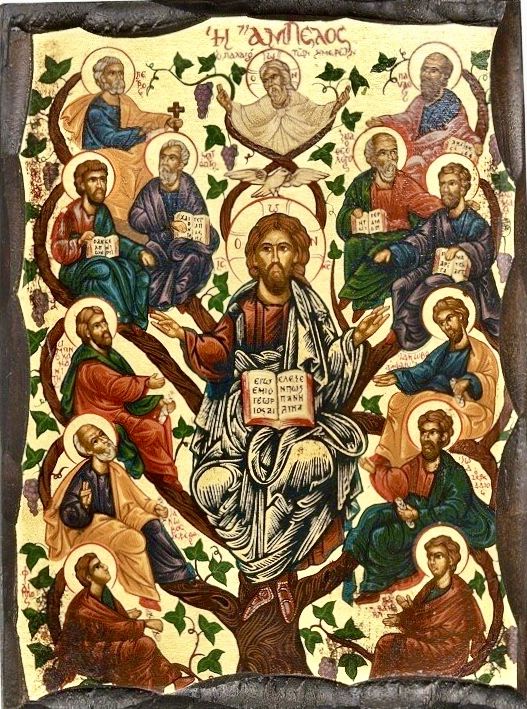
Indeed, in Romans 11:20-23, Paul elaborates on Jesus’ teaching in John 15. He explains that the Jews (the natural branches) were broken off due to their lack of faith (v. 20). In contrast, the Romans have remained steadfast in their faith (v. 21), which justifies them. However, Paul warns that the Romans can also be cut off if they do not persevere in their faith and kindness (v. 22-23). This indicates that those who are justified before God can fall away from their faith and lose their salvation, being “cut off.” Paul also mentions that those who are cut off can be grafted back in if they do not continue in their unbelief, as God has the power to graft them in again (v. 23). These verses significantly challenge the belief in “once saved, always saved.”
Hence, the text from John 15:1-11 serves as a profound reminder of the dynamic and relational understanding of salvation within Catholic theology. This passage metaphorically describes Christ as the true vine and believers as the branches, emphasizing the necessity for individuals to actively remain connected to Him in order to bear fruit. This imagery highlights the essential nature of an ongoing, interactive relationship with Christ, reflecting a faith that is not only alive but also visibly fruitful through good works and spiritual growth. In contrast, the Protestant doctrine of eternal security—often encompassed in the phrase “once saved, always saved”—focuses on salvation as a singular, definitive event. This perspective emphasizes the assurance of salvation through faith in Christ alone, which can sometimes lead to a perception that ongoing relationships and actions are less critical.
Both theological viewpoints approach the question of salvation with distinct nuances, illustrating the complexities of faith, grace, and human response within the Christian tradition. While Catholic teachings emphasize the importance of perseverance and collaboration with divine grace, Protestant thought underscores the unmerited grace of God that secures a believer’s relationship with Him. These differences invite deeper reflection on the nature of salvation and the believer’s journey within the framework of their faith.
“And as many of them, he added, as have repented, shall have their dwelling in the tower. And those of them who have been slower in repenting shall dwell within the walls. And as many as do not repent at all, but abide in their deeds, shall utterly perish…Yet they also, being naturally good, on hearing my commandments, purified themselves, and soon repented. Their dwelling, accordingly, was in the tower. But if any one relapse into strife, he will be cast out of the tower, and will lose his life.”
Hermas, The Shephard, 3:8:7 (A.D. 155)
“Christ shall not die again in behalf of those who now commit sin, for death shall no more have dominion over Him; but the Son shall come in the glory of the Father, requiring from His stewards and dispensers the money which He had entrusted to them, with usury; and from those to whom He had given most shall He demand most. We ought not, therefore, as that presbyter remarks, to be puffed up, nor be severe upon those of old time, but ought ourselves to fear, lest perchance, after [we have come to] the knowledge of Christ, if we do things displeasing to God, we obtain no further forgiveness of sins, but be shut out from His kingdom. And therefore it was that Paul said, ‘For if [God] spared not the natural branches, [take heed] lest He also spare not thee, who, when thou wert a wild olive tree, wert grafted into the fatness of the olive tree, and wert made a partaker of its fatness.’”
Irenaeus, Against Heresies, 4:27:2 (A.D. 180)
“Confession is the beginning of glory, not the full desert of the crown; nor does it perfect our praise, but it initiates our dignity; and since it is written, ‘He that endureth to the end, the same shall be saved,’ whatever has been before the end is a step by which we ascend to the summit of salvation, not a terminus wherein the full result of the ascent is already gained.”
Cyprian, Unity of the Church, 21 (A.D. 251)
PAX VOBISCUM
 Catholic Scripture
Leave a comment