THE IMMACULATE CONCEPTION
I will put enmities between thee and the woman,
and thy seed and her seed:
she shall crush thy head,
and thou shalt lie in wait for her heel.
Genesis 3, 15 (DRB)
“You shall be holy to me; for I the Lord am holy,
and have separated you from the peoples,
that you should be mine.”
Leviticus 20:26
You have seen what I have done to the Egyptians,
how I have carried you upon the wings of eagles,
and have taken you to myself.
Exodus 19, 4
Then the dragon stood before the woman who was about to bear a child, so that he might devour her
child as soon as it was born. And she gave birth to a son, a male child, who is to rule all the nations
with a rod of iron. But her child was snatched away and taken to God and to his throne; and the woman
fled into the wilderness, where she has a place prepared by God, so that there she can be nourished for
one thousand two hundred sixty days…. But the woman was given the two wings of the great eagle, so
that she could fly from the serpent into the wilderness, to her place where she is nourished for a time,
and times, and half a time. And the dragon cast out of his mouth water as a flood after the woman, that
he might cause her to be carried away by the flood.
Revelation 12, 4-6, 14-15
The verse Genesis 3:15 is often referred to as the “Protoevangelium,” which means “first gospel.” Within this passage, God addresses the serpent (symbolizing Satan) after the Fall of Adam and Eve, declaring a state of enmity between the serpent and the woman, and between their respective offspring. This text has profound implications in Catholic theology, particularly in understanding the Immaculate Conception of Mary.
The Hebrew word used for “enmity” in this verse is “ebah” (אֵיבָה). This term carries a connotation of hostility, intense opposition, and a deeply rooted animosity. It indicates that there is not just a passing conflict but a pronounced and profound divide that will persist between the Virgin Mary and the power of evil. In the context of the Immaculate Conception, this enmity is foundational for understanding Mary’s role in salvation history.
In Christian belief, particularly within Catholic doctrine, the Immaculate Conception refers to the conception of Mary without original sin. This state of grace is significant because it positions Mary as pure and untouched by the corruption that affects all humanity due to the Fall. When God declares enmity between the woman and the serpent, it suggests that Mary, as the “new Eve,” will play a critical role in the salvation narrative by giving birth to Jesus, the promised Messiah who will ultimately defeat sin and death by his passion, death, and resurrection.
The phrase “she shall crush thy head, and thou shalt lie in wait for her heel” embodies a powerful imagery where the offspring of the woman is prophesied to triumph over the serpent. This victory implies not only the defeat of sin and Satan but also the role of Mary as a key figure in this salvation. Through her Immaculate Conception, Mary is seen as a vessel through which this victory over sin and death is achieved. Her life, preserved from original sin, enables her to cooperate fully in God’s plan for redemption by her impeccable faith and obedience counteracting our primordial woman’s fall from original grace and moral contribution to the fall.
Thus, the enmity established in Genesis sets the stage for the profound relationship between Mary, her divine Son, and the forces of evil. It signifies that while the serpent would seek to bring about Mary’s downfall (through temptation and sin), she, by her purity and obedience to God, would stand firmly opposed to his schemes, playing an indispensable role in humanity’s redemption as the second Eve associated with the second Adam (cf. 1 Cor 15:45-49). This theological interpretation emphasizes the significance of Mary’s Immaculate Conception, illustrating how it fulfills the ancient prophecy outlined in Genesis and underscores her unique role in salvation history.
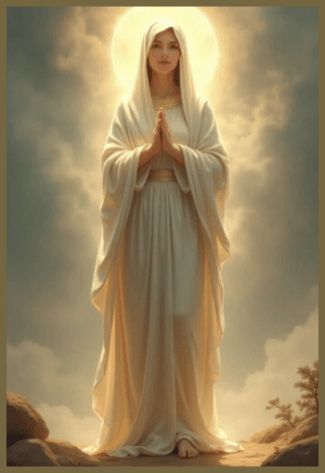
The text from Leviticus 20:26 states, “You shall be holy to me; for I the Lord am holy, and have separated you from the peoples, that you should be mine.” This verse underscores God’s profound call for His people to embody holiness and to live a life distinct from that of surrounding nations. The concept of being “set apart” not only reflects a moral and spiritual elevation but also serves as a protective measure, ensuring adherence to the values and commandments laid out by God.
This notion of holiness is deeply intertwined with the overarching biblical narrative of God’s covenant with the Israelites, emphasizing their unique relationship with Him as His chosen people. Throughout Scripture, this call to holiness manifests in various laws, rituals, and practices that guide the community in representing God’s character and glory to the world. By adhering to His standards, they are tasked with reflecting the divine nature in their everyday lives, ultimately showcasing their identity as God’s treasured possession. Thus, Leviticus 20:26 serves as a crucial reminder of the spiritual responsibility placed upon the faithful to live in a manner that honors and glorifies God.
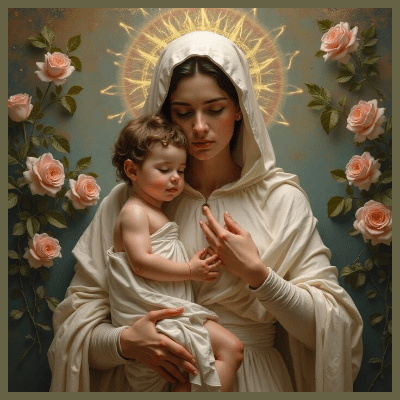
Mary’s divine maternity, being the Mother of Jesus Christ, further amplifies the theme of holiness. By bearing the Son of God, she becomes a vital part of God’s redemptive plan. Her unique role as the second Eve and mediator between humanity and Christ is reflected in the understanding that she was chosen and set apart for this remarkable task—she is both human and, in a unique way, a recipient of God’s grace.
The doctrine of the Immaculate Conception holds significant importance in this discussion. It teaches that Mary, the mother of Jesus, was conceived without original sin, a belief rooted in the understanding that she was preserved from the stain of sin from the very moment of her conception. This unique grace emphasizes her inherent purity and holiness, highlighting her exceptional role in salvation history. By being free from original sin, Mary was fully prepared to receive the Holy Spirit and bear the Son of God, Jesus Christ. Furthermore, this doctrine underscores her profound and special relationship with God, illustrating her as a chosen vessel to fulfill His divine plan. It demonstrates God’s desire for a people set apart for Himself, affirming Mary’s unique status and her pivotal role in the incarnation of Christ and the overall narrative of redemption.

The two texts, one from Exodus and the other from Revelation, can be interconnected with the doctrine of the Immaculate Conception of Mary in profound and symbolic ways. The passage from Exodus speaks to God’s protective nature, exemplified through the safeguarding of the Israelites as they journeyed through the wilderness. This theme of divine protection mirrors the belief that Mary, conceived without original sin, is under God’s special care, making her a pure vessel for the Incarnation of Christ.
Similarly, the imagery found in Revelation, particularly in the description of the Woman clothed with the sun, symbolizes the triumph of good over evil and the ultimate victory of life. This powerful depiction aligns with Mary’s role as the Mother of God and highlights her significance in salvation history. Together, these texts underscore the themes of divine favor and motherhood, portraying Mary not only as the embodiment of purity and grace but also as a protective figure who intercedes for humanity, establishing a deep spiritual connection between the Old and New Testament narratives.

In Exodus 19:4, the phrase “You have seen what I have done to the Egyptians, how I have carried you upon the wings of eagles, and have taken you to myself” vividly illustrates God’s protective nature and the special covenant relationship He has with His people. The imagery of being carried on the “wings of eagles” conveys a sense of powerful nurturing, evoking the instinctive care of a mother eagle as she diligently safeguards her vulnerable chicks. This metaphor emphasizes God’s active involvement in guiding and protecting the Israelites throughout their tumultuous journey from slavery in Egypt to freedom and a covenant with Him at Mount Sinai.
Furthermore, this divine guidance closely parallels the unique and pivotal role of Mary in Christian theology. Just as God delivered the Israelites from the harsh bonds of oppression in Egypt, leading them to safety through a miraculous parting of the Red Sea and guiding them in the wilderness, He specifically chose Mary to be the vessel for the Incarnation of His Son, Jesus Christ. This selection marks an extraordinary moment in salvation history, as Mary was called to fulfill a purpose prophesied for centuries.
The belief that Mary was preserved from original sin emphasizes her exceptional status and suitability for this divine mission. By safeguarding her from sin from the very moment of her conception, God ensured that she could bear the purest form of humanity, free from the blemish of sin that afflicts all other human beings who fall within reach of the serpent. This profound action illustrates God’s proactive role in the salvation narrative, emphasizing His desire to convey His grace through an immaculate vessel.
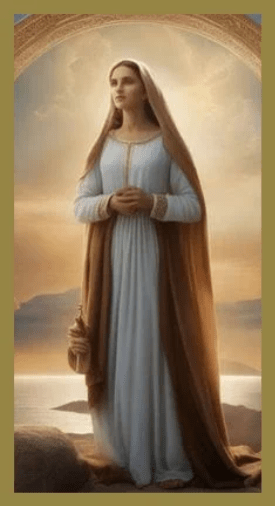
The imagery found in Revelation 12 reinforces this protective aspect through the story of the woman and the dragon. Here, the woman represents both Mary and, more broadly, Israel or the Church. Her flight into the wilderness, aided by the “two wings of the great eagle,” symbolizes divine assistance and protection against the threats posed by evil (the dragon). This not only connects to Mary’s role as the mother of Jesus but also emphasizes her purity and holiness—qualities essential to the understanding of the Immaculate Conception. The woman’s protection in the wilderness for “a time, and times, and half a time” signifies that she is safeguarded by God amidst struggle and adversity, paralleling how Mary, through her purity and grace, plays a pivotal role in God’s salvation narrative.
Thus, both texts highlight God’s protective love and selectivity, tying into the doctrine of the Immaculate Conception. They underscore the themes of divine favor toward Mary and her unique role as the bearer of Christ, while also symbolizing the larger narrative of salvation history, in which God’s mercy and intervention play a central role. This connection frames Mary not just as a passive participant but as an active figure in the divine plan, favored and protected by God from the beginning.
“For Eve, who was a virgin and undefiled, having conceived the word of the
serpent, brought forth disobedience and death. But the Virgin Mary received
faith and joy, when the angel Gabriel announced the good tidings to her that
the Spirit of the Lord would come upon her, and the power of the Highest would
overshadow her: wherefore also the Holy Thing begotten of her is the Son of
God; and she replied, ‘Be it unto me according to thy word.’ And by her has
He been born, to whom we have proved so many Scriptures refer, and by whom
God destroys both the serpent and those angels and men who are like him; but
works deliverance from death to those who repent of their wickedness and
believe upon Him.”
St. Justin Martyr [155 A.D]
Dialogue with Trypho, 100
“Consequently, then, Mary the Virgin is found to be obedient, saying, ‘Behold, O
Lord, your handmaid; be it done to me according to your word.’ …Thus, the knot
of Eve’s disobedience was loosed by the obedience of Mary. What the virgin Eve
had bound in unbelief, the Virgin Mary loosed through faith.”
St. Irenaeus [inter A.D. 180-189]
Against Heresies 3:22:24
“For whereas the Word of God was without flesh, He took upon Himself the holy flesh by the holy Virgin, and prepared a robe which He wove for Himself, like a bridegroom, in the sufferings of the cross, in order that by uniting His own power with our moral body, and by mixing the incorruptible with the corruptible, and the strong with the weak, He might save perishing man.”
St. Hippolytus, Treatise on Christ and anti-Christ, 4 (A.D. 200)
AVE MARIA
 Catholic Scripture
Leave a comment