
JUSTIFICATION
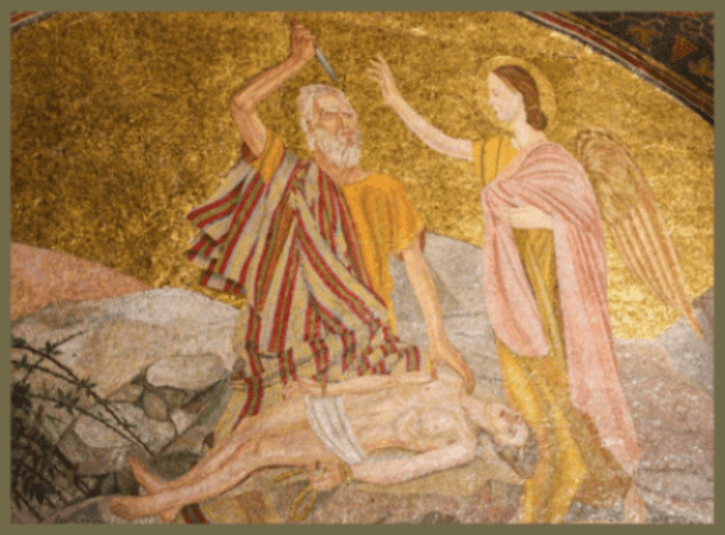
For what saith the Scripture that Abraham believed God
and it was counted unto him as righteousness (dikaiosunen).
Romans 4, 3
Therefore, we conclude that a man is justified (dikaiousthai) by faith
without the deeds of the law.
Romans 3, 28
Was not Abraham our father justified (edikaiosthe) by works
when he had offered his son Isaac up to God on the altar?
James 2, 21
You see then that how by works a man is justified (dikaiotai),
and not by faith only.
James 2, 24 [KJV]
The question of whether Paul and James contradict each other regarding justification by faith versus works has been a topic of extensive theological discussion throughout the history of the church. At first glance, it may appear that Paul and James present opposing views on this critical issue.
Paul strongly emphasizes justification by faith, particularly in his epistle to the Romans. In Romans 3:28, he proclaims, “Therefore we conclude that a man is justified by faith without the deeds of the law.” This statement encapsulates his theology, which holds that faith in Jesus Christ—rooted in His sacrificial death and resurrection—is the sole means by which believers are justified in God’s sight. Paul asserts that works of the Mosaic law cannot contribute to one’s salvation, as salvation is a gift of grace, available through faith (Ephesians 2:8-9). It isn’t something that we are justly entitled to by placing God in our debt. His letters frequently emphasize the transformative power of faith and the internal transformation it brings about in a believer’s life.
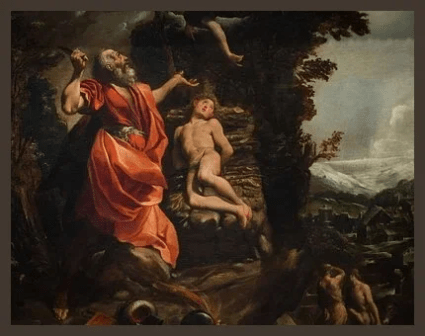
On the other hand, the Epistle of James highlights the importance of works as tangible evidence of genuine faith. In James 2:24, he states, “You see then that a man is justified by works, and not by faith only.” This verse illustrates his belief that faith must manifest itself through actions, thereby validating its authenticity. James uses the example of Abraham’s willingness to sacrifice his son Isaac, demonstrating that true faith is shown through obedience and action (James 2:21-22). His emphasis is on the outward expression of faith, suggesting that faith without works is dead (James 2:26).
Many theologians argue that Paul and James are not in conflict but rather address different facets of the relationship between faith and works. Paul’s doctrine primarily focuses on the initial act of faith that leads to salvation, portraying justification as a legal declaration of righteousness. In contrast, James is concerned with the practical implications of that faith in the believer’s daily life, emphasizing how authentic faith naturally results in good works. Therefore, rather than contradicting each other, Paul and James complement one another, painting a more holistic picture of faith’s role in the life of a believer. While justification begins with faith, it inevitably translates into a lifestyle marked by good works that reflect that faith to the world.
The passage from Romans 2:5-8 addresses the consequences of one’s actions and God’s judgment based on those actions. It emphasizes the idea that individuals who stubbornly resist the truth and continue in wrongdoing are essentially building up their own condemnation. In contrast, those who seek after righteousness through “perseverance in good works” will receive eternal life. This establishes a foundational theme in Paul’s letters regarding the importance of one’s response to God’s truth and the moral implications that follow.
When we connect this passage in Romans 2 to Romans 4:3, which states, “For what does the Scripture say? ‘Abraham believed God, and it was reckoned to him as righteousness,’” we see an interesting interplay between faith and works. Romans 4 underscores that righteousness comes through faith, not merely by adherence to the prescriptions of the Mosaic Law or through one’s works alone outside the system of grace. Abraham’s belief was credited to him as righteousness, highlighting that trust in God and His promises is crucial.
Romans 3:28 furthers this exploration by stating, “Therefore, we conclude that a man is justified (dikaiousthai) by faith without the deeds of the law.” In Catholic doctrine, justification is viewed as a process that includes faith, works, and grace. While the initial act of grace brings justification, it is through faith—specifically, faith in Jesus Christ and acceptance of His sacrifice—that believers enter a reconciliatory relationship with God. The “deeds of the law,” representing the Mosaic Law’s various requirements, do not, in themselves, bring about righteousness, emphasizing that salvation is a gift freely given by God’s grace.
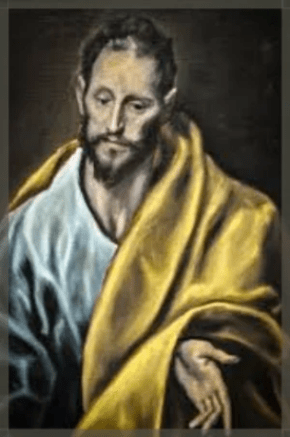
The passages from James 2:21 and James 2:24 serve as a pivotal reflection on the relationship between faith and works. The focus of these texts emphasizes that genuine faith must be manifested through actions; that is, faith cannot exist merely as an intellectual assent but should be actively lived out through good deeds in God’s grace.
The first passage, “Was not Abraham our father justified (edikaiosthe) by works when he had offered his son Isaac up to God on the altar?” (James 2:21), highlights Abraham as a model of faith made complete by his actions. In the narrative of Abraham, we see that his willingness to sacrifice Isaac was not only an act of obedience but a profound expression of his trust in God. This event illustrates that Abraham’s justification came through his works, specifically through acts that bear witness to his faith in God’s promise concerning Isaac’s future inheritance.
The subsequent verse, “You see then that how by works a man is justified (dikaiotai), and not by faith only” (James 2:24), reinforces the idea that faith and works are intrinsically linked within the life of a believer. In Catholic theology, this passage aligns with the understanding of justification as a process that encompasses both faith in Christ and the living out of that faith through actions. The Catholic Church teaches that while faith is the starting point of salvation, it must be complemented by love and good works, reflecting Christ’s teachings and responding to His grace.

Hence, Paul’s Letter to the Romans and the Letter of James address the relationship between faith and works, but they do so from different perspectives and contexts, which can make it seem like they contradict each other at first glance. However, when examined closely, they reveal a complementary understanding of faith, justification, and the role of works in the framework of unmerited grace.
The writings of James and Paul collectively advocate for a comprehensive understanding of faith that goes beyond superficial belief and professions of faith. They urge believers to acknowledge that genuine faith is not only a matter of intellectual assent or religious motions but also manifests through tangible actions that align with God’s will and purpose. This dynamic relationship between faith and works is crucial to the Catholic understanding of salvation, emphasizing that faith must be lived out through concrete deeds to be complete and beneficial.
By engaging in acts of charity, justice, and compassion, individuals embody their beliefs and contribute to the greater good of the community. This holistic approach to faith calls for a transformative lifestyle, where believers actively participate in God’s mission, making their faith evident in the world around them and demonstrating a commitment to living out their convictions in a meaningful and impactful way.
“‘And other sheep there are also,’ saith the Lord, ‘which are not of this fold ‘–deemed worthy of another fold and mansion, in proportion to their faith. ‘But My sheep hear My voice,’ understanding gnostically the commandments. And this is to be taken in a generous and worthy acceptation, along with also the recompense and accompaniment of works. So that when we hear, ‘Thy faith hath saved thee, we do not understand Him to say absolutely that those who have believed in any way whatever shall be saved, unless also works follow. But it was to the Jews alone that He spoke this utterance, who kept the law and lived blamelessly, who wanted only faith in the Lord. No one, then, can be a believer and at the same time be licentious; but though he quit the flesh, he must put off the passions, so as to be capable of reaching his own mansion.”
St. Clement of Alexandria (A.D. 202)
The Stromata, 6:14
“Now we have a woven work, when faith and action go together. Let none suppose me to be misguided, in that I made at first a threefold division, each part containing four, and afterwards a fourfold division, each part containing three terms. The beauty of a good thing pleases the more, if it be shown under various aspects. For those are good things, whereof the texture of the priestly robe was the token, that is to say, either the Law, or the Church, which latter hath made two garments for her spouse, as it is written’–the one of action, the other of spirit, weaving together the threads of faith and works…. Faith is profitable, therefore, when her brow is bright with a fair crown of good works. This faith–that I may set the matter forth shortly–is contained in the following principles, which cannot be overthrown.”
St. Ambrose of Milan (A.D. 380)
On the Christian Faith, II:11, 13
PAX VOBISCUM
 Catholic Scripture
Leave a comment