

DIVINE JUDGMENT

By your stubbornness and impenitent heart, you are storing up wrath for yourself on the day of wrath and revelation of the just judgment of God, who will repay everyone according to his works: eternal life to those who seek glory, honour, and immortality through perseverance in good works, but wrath and fury to those who selfishly disobey the truth and obey wickedness.
Romans 2, 5-8
The passage from Romans 2:5-8 presents crucial themes that are central to Paul’s Epistle to the Romans. This section emphasizes the concept of divine judgment, highlighting the consequences of human actions and the righteousness of God. Historically, it underscores the early Christian community’s struggle to understand the relationship between faith and works, particularly in the context of Jewish and Gentile believers. Theologically, within the Catholic tradition, this passage invites deeper reflection on the nature of sin, redemption, and the importance of genuine faith expressed through good deeds, reinforcing the belief in a just and equitable divine judgment.
The Letter to the Romans was addressed to a community of Jewish and Gentile Christians in Rome around A.D. 57. Paul wrote it to clarify his teachings regarding salvation, the law, faith, and God’s righteousness. At the time, there was tension between Jewish Christians, who adhered to the Mosaic Law, and Gentile Christians, who had come to faith without the historical context of Jewish law. Paul argues that both groups are subject to God’s judgment based on their actions, not merely their heritage or adherence to law. The concept of judgment and legal accountability resonated with the Roman audience, familiar with their legalistic society. Paul uses legal language to illustrate God’s fair judgment, contrasting human ideas of justice with divine justice.

In Catholic theology, God’s judgment is viewed as just and righteous. Romans 2:5-8 emphasizes that God’s judgment is based on one’s deeds rather than merely on faith or cultural identity. This affirms the idea that works play a role in the overall economy of salvation, consistent with Catholic teaching. While the Catholic Church upholds the necessity of grace for salvation, it also acknowledges that human cooperation in good works is essential. This passage reinforces the belief that eternal life is offered to those who seek it through perseverance in good works, aligning with the Catholic understanding of faith that is active in love.
Paul cautions against a stubborn and impenitent heart. In Catholic teaching, this reflects the importance of repentance and conversion. A failure to seek God’s mercy can lead to spiritual ruin, illustrating the need for ongoing transformation in one’s life. The imagery of “wrath and fury” for selfish disobedience provides a stark warning about the consequences of sin. This aligns with Catholic eschatology, where one’s response to divine truth has eternal implications, highlighting the reality of Heaven and Hell.
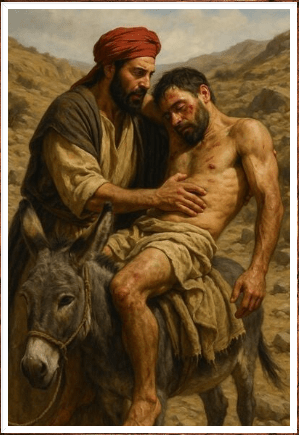
The epistle emphasizes the profound narrative of ultimate justice within God’s divine plan. According to Catholic teaching, God’s justice is unwavering and will ultimately prevail; every individual will be held accountable for their choices throughout their lives. This promise of divine justice acts as a powerful motivator for believers, encouraging them to pursue ethical living and embrace moral responsibility in their daily actions.
Romans 2:5-8 presents crucial themes that center on personal accountability, the significance of good works in response to faith, and the essence of God’s just judgment. This passage emphasizes that individuals will be held accountable for their actions—indicating that divine judgment is not arbitrary but rather rooted in the choices each person makes. The text underscores the necessity of good works as a natural outcome of genuine faith, suggesting that true belief should manifest in ethical behavior and virtuous deeds.
These concepts are not only central to the theological framework of Catholic doctrine, which teaches that faith and works are intertwined, but they also resonate profoundly within the historical context of the early Christian communities. These communities faced numerous ethical dilemmas, particularly as they navigated the complexities of a diverse society that often contradicted their values. The call to align one’s actions with one’s beliefs was a pressing issue, as early Christians sought to embody their faith amidst persecution and moral challenges. Overall, Romans 2:5-8 invites deeper reflection on how faith translates into action and the implications of divine justice.

Paul emphasizes to believers the complex and interconnected relationship between faith and works, urging them to cultivate a deeper and more authentic commitment to living out their faith. He illustrates that merely professing belief is insufficient; instead, believers are called to embody their convictions through tangible actions that reflect the principles of love, compassion, and justice. This demonstration of faith through good works serves not only as a testament to one’s beliefs but also plays a vital role in fostering a community that mirrors the values of God’s kingdom on Earth. By actively engaging in acts of service, kindness, and ethical living, individuals contribute meaningfully to the transformation of society, ultimately advancing the vision of harmony and righteousness that God desires for humanity.
In essence, Romans 2:5-8 encapsulates critical themes of personal accountability, the imperative of good works as a tangible expression of faith, and the character of God’s equitable judgment—elements that are not only vital in the historical context of early Christian communities but also foundational within the theological framework of Catholic teaching. This passage highlights the intrinsic relationship between faith and works, emphasizing that genuine belief must manifest in righteous actions. It serves as a profound call to believers, urging them to engage more deeply with their faith by embodying its teachings in their daily lives. By doing so, they not only affirm their commitment to God’s commandments but also contribute to the collective moral fabric of the community, reflecting the transformative power of the Gospel.
“Seeing, therefore, that we are the portion of the Holy One, let us do all those things which pertain to holiness, avoiding all evil-speaking, all abominable and impure embraces, together with all drunkenness, seeking after change, all abominable lusts, detestable adultery, and execrable pride. ‘For God,’ saith [the Scripture], ‘resisteth the proud, but giveth grace to the humble.’ Let us cleave, then, to those to whom grace has been given by God. Let us clothe ourselves with concord and humility, ever exercising self-control, standing far off from all whispering and evil-speaking, being justified by our works, and not our words.”
St. Clement of Rome, Epistle to the Corinthians, 30 (A.D. 98)
“We have learned from the prophets, and we hold it to be true, that punishments, and chastisements, and good rewards, are rendered according to the merit of each man’s actions. Since if it be not so, but all things happen by fate, neither is anything at all in our own power…But this we assert is inevitable fate, that they who choose the good have worthy rewards, and they who choose the opposite have their merited awards. For not like other things, as trees and quadrupeds, which cannot act by choice, did God make man: for neither would he be worthy of reward or praise did he not of himself choose the good, but were created for this end; nor, if he were evil, would he be worthy of punishment, not being evil of himself, but being able to be nothing else than what he was made.”
St. Justin Martyr, First Apology, 6 (A.D. 155)
“But do you also, if you please, give reverential attention to the prophetic Scriptures, and they will make your way plainer for escaping the eternal punishments, and obtaining the eternal prizes of God. For He who gave the mouth for speech, and formed the ear to hear, and made the eye to see, will examine all things, and will judge righteous judgment, rendering merited awards to each. To those who by patient continuance in well-doing seek immortality, He will give life everlasting, joy, peace, rest, and abundance of good things, which neither hath eye seen, nor ear heard, nor hath it entered into the heart of man to conceive. But to the unbelieving and despisers, who obey not the truth, but are obedient to unrighteousness, when they shall have been filled with adulteries and fornications, and filthiness, and covetousness, and unlawful idolatries, there shall be anger and wrath, tribulation and anguish, and at the last everlasting fire shall possess such men. Since you said, “Show me thy God,” this is my God, and I counsel you to fear Him and to trust Him.”
St. Theophilius of Antioch, To Autolycus, I:14 (A.D. 181)

PAX VOBISCUM
 Catholic Scripture
Leave a comment