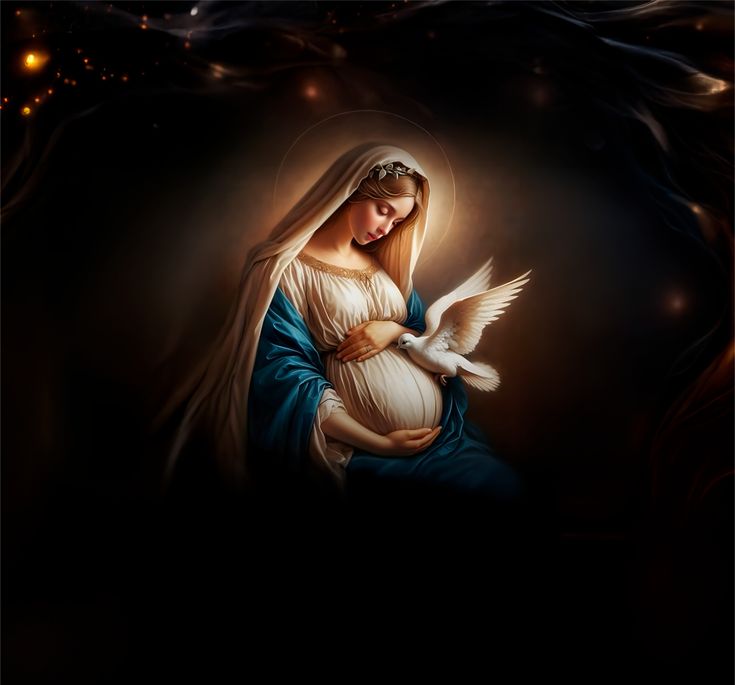
the divine maternity
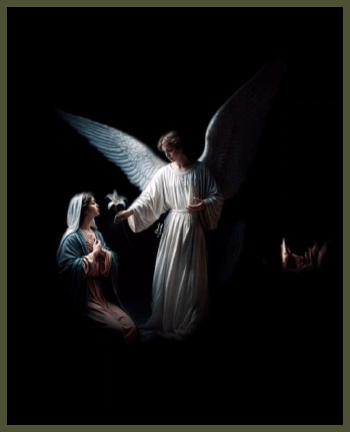
And Mary said to the angel: How shall this be done, because I know not man?
And the angel answering, said to her: The Holy Ghost shall come upon thee,
and the power of the Most High shall overshadow thee. And therefore also the Holy
which shall be born of thee shall be called the Son of God.
Luke 1, 34-35
In this verse, the angel further elucidates the profound reality that “the Holy Ghost shall come upon thee,” which emphasizes that Mary’s conception of Jesus transcends ordinary human processes and represents a miraculous intervention by the Holy Spirit. This pivotal moment underscores the extraordinary nature of Mary’s divine motherhood, presenting her as the chosen vessel through which the Incarnation occurs. By conceiving Jesus through divine means, Mary embodies a unique role in salvation history, bridging the divine and human realms. The declaration not only affirms her purity and grace but also signifies the start of a transformative journey for humanity, as it heralds the arrival of the Messiah who will bring redemption.
Mary’s acceptance of the divine call from the Angel Gabriel underscores her unique and pivotal role in the narrative of salvation history. By consenting to become the Mother of God, she exemplifies an unparalleled level of faith and a courageous willingness to embrace God’s plan, despite the societal and personal implications of her decision. Her response, often captured in the words, “let it be unto me according to thy word,” reflects an unwavering trust in God’s wisdom, purpose, and timing.
This profound acceptance not only signifies her personal devotion but also serves as a model of obedience that is essential for all believers. Through her example, Mary showcases the virtues of humility, recognizing her role in a greater divine story, and submission to divine will, which invites others to reflect on their own openness to God’s calling. Her willingness to accept such a monumental task at a young age invites admiration and reverence, as it challenges individuals to consider their own faith journeys and responses to the divine. In essence, Mary’s acceptance is a beautiful testament to the transformative power of faith and the importance of surrendering to God’s greater purpose.
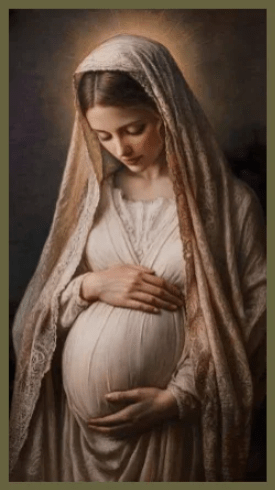
Moreover, this event serves as a profound testament to the dual nature of Christ, who is fully divine and fully human. In Mary’s womb, the Word—identified as Jesus Christ—takes on human flesh, embodying the perfect union of divinity and humanity while simultaneously remaining wholly divine. This miraculous occurrence establishes Mary as a pivotal figure in Christian theology, underscoring her unique role as the Mother of God.
Her divine motherhood not only elevates her status within the Christian tradition but also highlights the significance of her role in the mystery of the Incarnation. This mystery reveals the depth of God’s love for humanity, as it signifies God’s willingness to enter into the human experience. It emphasizes the importance of Mary’s consent and obedience, illustrating her vital participation in salvation history. Through her, the incarnation of Christ becomes a tangible expression of divine grace, demonstrating the profound connection between God and humanity.
Mary’s willingness to undertake the extraordinary mission of becoming the Mother of God reflects her profound inner strength and unwavering holiness, establishing her as an exemplary figure for the faithful across generations. Her life serves as a poignant reminder that accepting God’s calling often necessitates not only immense courage but also personal sacrifice and a deep, abiding commitment to His divine will. In the context of the Annunciation, where the angel Gabriel proclaimed her role in salvation history, her response, “I am the Lord’s servant; may your word to me be fulfilled,” exemplifies her trust and surrender to God’s plan. Therefore, Mary’s role as the Mother of God extends beyond her biological connection to Jesus—she embodies a spiritual beacon of faith, resilience, and trust in God’s overarching purpose for salvation, encouraging the faithful to embrace their own calls with similar grace and dedication.
“Many, my beloved, are the true testimonies concerning Christ. The Father bears witness from heaven of His Son: the Holy Ghost bears witness, descending bodily in likeness of a dove: the Archangel Gabriel bears witness, bringing good tidings to Mary: the Virgin Mother of God bears witness: the blessed place of the manger bears witness.”
St. Cyril of Jerusalem, Catechetical Lectures, X:19
(c. A.D. 350)
“Let, then, the life of Mary be as it were virginity itself, set forth in a likeness, from which, as from a mirror, the appearance of chastity and the form of virtue is reflected. From this you may take your pattern of life, showing, as an example, the clear rules of virtue: what you have to correct, to effect, and to hold fast. The first thing which kindles ardour in learning is the greatness of the teacher. What is greater than the Mother of God?”
St. Ambrose, Virginity, II:6
(c. A.D. 378)
“But since the Holy Virgin brought forth after the flesh God personally united to the flesh, for this reason we say of her that she is Theotokos, not as though the nature of the Word had its beginning of being from the flesh, for he was in the beginning, and the Word was God, and the Word was with God…but, as we said before, because having personally united man’s nature to himself…”
St. Cyril of Alexandria, To Nestorius, Epistle 17:11
(A.D. 430)
AVE MARIA
 Catholic Scripture
Leave a comment