The Rule of faith
But if I should be delayed, you should know how to behave in the household of God,
which is the church of the living God, the pillar and foundation of truth.
1 Timothy 3:15
The text from 1 Timothy 3:15 highlights essential elements of the Catholic Church’s doctrine regarding the nature and role of the Church as the foundation of truth. This verse emphasizes the Church as the “household of God,” suggesting a familial and communal aspect of faith, where believers are called to live in accordance with God’s teachings.
In Catholic doctrine, the Church is seen as the continuation of Christ’s presence on earth and the primary means through which God reveals His truth. The notion of the Church as the “pillar and foundation of truth” underlines its role in safeguarding and proclaiming the truths of faith, which are articulated in Scripture and Tradition. The Church, through the Magisterium (the teaching authority), interprets these truths and guides the faithful in understanding and living them out.
The passage from 1 Timothy 6:20-21 is a directive from the apostle Paul to Timothy, who has been ordained Bishop (episkopēs). It urges him to be vigilant in safeguarding the teachings and truths that have been entrusted to him within the Christian faith. The phrase “guard what has been entrusted to you” highlights the responsibility of both leaders and believers to protect the integrity of their beliefs and doctrines. The admonition to “avoid profane babbling and the absurdities of so-called knowledge” highlights the danger of engaging in empty or meaningless discussions that stray from the core tenets of faith. This suggests that individuals may be tempted to pursue speculative or heretical ideas, which can lead them astray.
The concluding remark, “By professing it, some people have deviated from the faith,” serves as a cautionary note. It illustrates that an inclination toward false teachings can have severe consequences, leading to a departure from true faith. This highlights the importance of discernment and the need to adhere closely to sound doctrine to maintain a strong and faithful spiritual life.
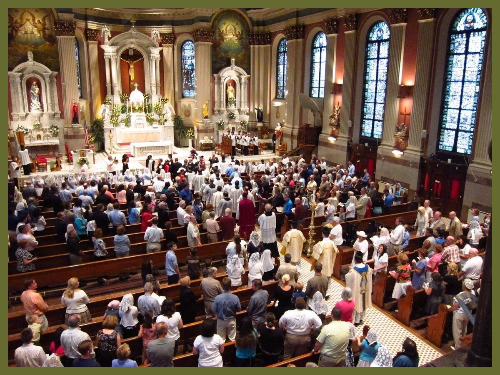
The reference in 1 Timothy 3 to proper behavior within the Church indicates that there are expectations and responsibilities for its members. This encompasses not only personal piety but also the communal aspect of faith, where unity, charity, and adherence to Christ’s teachings are vital. In this context, the Church serves as the guardian of the faith, providing believers with the necessary teachings and sacraments to deepen their relationship with God. The Catholic understanding emphasizes that faith is not merely a private affair but is lived out within the community of believers, reflecting the teaching and sacramental life of the Church.
This verse encapsulates the Catholic belief in the Church as a divinely instituted institution, established by Christ, through which the faithful receive spiritual guidance, participate in communal worship, and access the sacraments, which are essential means of grace. The Church serves as the living body of Christ, ensuring continuity in the faith across generations and fostering adherence to the core truths of the Gospel. Through community, tradition, and teaching, the Church nurtures the spiritual development of its members, guiding them in their moral and ethical lives in accordance with Christian teachings.
1 Timothy 3:15 is often cited in discussions about the authority of Scripture and the role of the Church, particularly in the context of the debate surrounding ‘sola Scriptura,’ a principle central to many Protestant beliefs. Sola Scriptura, meaning “Scripture alone,” holds that the Bible is the sole infallible source of authority for Christian faith and practice. Protestant reformers championed this doctrine, positing that the Scriptures are sufficient for salvation and moral guidance, independent of church tradition or ecclesiastical authority.
Here’s how 1 Timothy 3:15 can be seen as a refutation of the Protestant stance on sola Scriptura: The verse highlighting the Church as the “pillar and ground of the truth” suggests an essential role for the Church in upholding and interpreting the truth, which does include the Canon of Scripture, since Holy Writ isn’t self-authenticating. If the Church is tasked with preserving and providing definitive guidance on the truth, it implies that there are aspects of faith and practice that may not be derived solely from Scripture, but from the Church’s authority and tradition.

Paul writes to Timothy about how to conduct oneself in the Church, indicating that the Church has a structured authority and guidance system. This implies that there is more than just the written word (Scripture) guiding the believers; the community of faith, led by its ordained leaders, plays a crucial role in instructing and maintaining order. The notion that the Church exists as a pillar of truth suggests that the interpretation of Scripture is also vital. Sola Scriptura can lead to individual interpretations that diverge widely; the verse argues for a communal understanding facilitated by the Church’s authority, which helps preserve doctrinal unity.
Early Christians did not possess in unity the complete New Testament as it is known today. The teachings and authority of the Church were fundamental in guiding the early believers in the first three centuries. Paul’s instruction to Timothy thus reflects the reality that the nascent community and its leaders were vital sources of the Christian faith, acting together with Scripture, exclusively the Old Testament in light of Christian teachings and beliefs (Tradition)under the guidance or non-verbal declaration of the Holy Spirit (cf. Jn 16:12-13; 14:16).
Sola Scriptura can lead to a strong focus on personal interpretation of the Bible, often resulting in a multitude of denominations and conflicting beliefs. In contrast, 1 Timothy 3:15 highlights a collective structure in which the Church, serving as the “household of God,” plays a significant role in guiding believers and upholding doctrinal integrity. Hence, 1 Timothy 3:15 underscores the necessity of the Church’s role alongside Scripture, challenging the complete reliance on Scripture alone as posited by sola Scriptura. It highlights a view that combines scriptural authority with the importance of communal faith and an authoritative doctrinal interpretation, suggesting that both Scripture and the one visible Church originally founded by Jesus Christ on Peter and the Apostles are integral to understanding and living out the Christian faith.
“Those, therefore, who desert the preaching of the Church, call in question the knowledge of the holy presbyters, not taking into consideration of how much greater consequence is a religious man, even
in a private station, than a blasphemous and impudent sophist. Now, such are all the heretics, and
those who imagine that they have hit upon something more beyond the truth, so that by following
those things already mentioned, proceeding on their way variously, in harmoniously, and foolishly,
not keeping always to the same opinions with regard to the same things, as blind men are led by the
blind, they shall deservedly fall into the ditch of ignorance lying in their path, ever seeking and never finding out the truth. It behooves us, therefore, to avoid their doctrines, and to take careful heed lest we suffer any injury from them; but to flee to the Church, and be brought up in her bosom, and be nourished with the Lord’s Scriptures.”
St. Irenaeus, Against Heresies, 5,20:2 (A.D. 180)
PAX VOBISCUM
 Catholic Scripture
Leave a comment