THE SACRAMENT OF HOLY MATRIMONY

Then the Lord God said, “It is not good that the man should be alone; I will make him a helper fit for him.” So the Lord God caused a deep sleep to fall upon the man, and while he slept took one of his ribs and closed up its place with flesh; and the rib which the Lord God had taken from the man he made into a woman and brought her to the man. Then the man said, “This at last is bone of my bones and flesh of my flesh; she shall be called Woman, because she was taken out of Man.” Therefore a man leaves his father and his mother and cleaves to his wife, and they become one flesh.
Genesis 2, 18, 21-24
He answered, “Have you not read that he who made them from the beginning made them male and female, and said, ‘For this reason a man shall leave his father and mother and be joined to his wife, and the two shall become one’? So they are no longer two but one. What therefore God has joined together, let not man put asunder.” They said to him, “Why then did Moses command one to give a certificate of divorce, and to put her away?” He said to them, “For your hardness of heart Moses allowed you to divorce your wives, but from the beginning it was not so. And I say to you: whoever divorces his wife, except for unchastity, and marries another, commits adultery; and he who marries a divorced woman, commits adultery.”
Matthew 19, 4-9
The passage from Genesis 2:18, 21-24 presents profound themes centered around companionship, the process of creation, and the fundamental nature of human relationships. Specifically, it delves into the creation of woman as a companion for man, illustrating the intentionality behind human relationships. The passage emphasizes the importance of social connection, suggesting that solitude is not aligned with the divine plan for humanity. Moreover, it highlights the collaborative nature of human existence, where partnership is not just beneficial but essential for fulfilling one’s purpose. The imagery of God forming Eve from Adam’s rib symbolizes the intimate bond and equality between the two, suggesting that true companionship is rooted in mutual support and shared identity. This passage thus invites reflection on the essential role of relationships in our lives, echoing the belief that we are created for connection and companionship.
The declaration that “it is not good that the man should be alone” acutely emphasizes the significance of companionship in human life. This statement suggests that human beings are inherently social creatures, naturally inclined to seek connection and interaction with others. Relationships—whether familial, friendly, or romantic—play a crucial role in our emotional and psychological well-being. They provide us with support during difficult times, enhance our happiness through shared experiences, and foster a sense of belonging and purpose. Ultimately, the connections we forge with others serve as a foundation for our contentment and emotional resilience in a world that is often challenging.

The method of creating Woman from Man’s rib serves as a metaphor for the deep connection between the two. This act not only symbolizes the physical closeness, as both are derived from the same substance, but also highlights the concept of equality and mutual dependence in their roles. By forming Woman from Man’s rib, the narrative reinforces the idea that men and women are intrinsically linked, each embodying complementary strengths and qualities. This shared essence suggests that rather than being oppositional, they are designed to support and uplift one another, emphasizing the importance of collaboration and partnership in their relationship.
When the man responds, “This at last is bone of my bones and flesh of my flesh,” it signifies a keen recognition of Woman as his true counterpart and equal. This declaration transcends mere words; it embodies a profound understanding of shared identity and mutual connection. In this moment, the act of naming her highlights the significance of their relationship, as it establishes a fundamental bond of kinship that transcends mere physicality. By identifying her in this way, the man acknowledges not only their integral connection but also the essential harmony between their natures, suggesting a partnership rooted in both love and unity.
The concluding verse, which highlights a man leaving his parents to unite with his wife, emphasizes the profound transformation involved in establishing a new family unit. This act of leaving signifies not only a physical departure but also an emotional and social one, as the couple embarks on a shared journey of life together. The phrase “they become one flesh” encapsulates the deep physical, emotional, and spiritual union intended to flourish within marriage. This union represents a holistic connection that encompasses intimacy, mutual support, and partnership, underscoring a commitment to nurture and sustain one another through all of life’s challenges and joys. It reflects the ideal of shared dreams, values, and aspirations, reinforcing the idea that, in marriage, two individuals become intricately intertwined, creating a bond that extends beyond mere companionship to a lifetime of unity and collaboration.
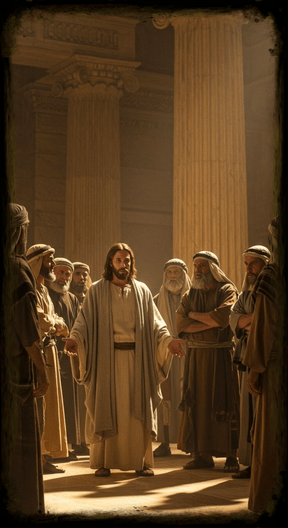
In their Gospels, both Matthew and Mark present Jesus’ teaching on marriage primarily in response to the Pharisees’ challenging questions regarding the permissibility of divorce. In Matthew 19:3-9, Jesus emphasizes the sanctity of marriage, referencing the creation narrative where God made them male and female and ordained that a man shall leave his father and mother and be joined to his wife, becoming one flesh. This highlights the divine intention for marital unity and the seriousness of dissolving that bond. Mark 10:2-12 echoes this teaching with slightly different wording, stressing that what God has joined together should not be separated. Both accounts reflect Jesus’ commitment to upholding the integrity of marriage while addressing the cultural practices of His time, which often allowed for divorce under various conditions. Ultimately, His teachings challenge the audience to consider the deeper moral implications of marriage and divorce, calling for a profound respect for the covenantal nature of this relationship.
Matthew 19:6 emphasizes the indissolubility of marriage with the powerful declaration, “What therefore God has joined together, let not man separate.” This verse underscores the belief that marriage transcends a mere social contract; it is a sacred covenant established by God (cf. Rom 7:2-3). The language used highlights the divine authority and intention behind the union, suggesting that it is meant to be a permanent bond. This perspective fosters a deep respect for the marital relationship, viewing it as a unique partnership that should be nurtured and protected. The emphasis on the sacredness of the union serves to remind individuals of their commitment to one another, reinforcing the idea that marriage is rooted in faith and divine purpose. By framing marriage in this way, it invites couples to approach their relationship with a sense of reverence and responsibility.
The passage from Matthew 19:9 highlights a significant teaching within Christian doctrine regarding marriage and divorce, especially as interpreted by the Catholic Church. In this verse, Jesus addresses the issue of divorce, emphasizing the sanctity of marriage. He articulates that divorce is not permissible except in the case of sexual immorality – an incestuous marriage. This reflects the Catholic teaching that marriage is a sacrament, a sacred covenant between a man and a woman that reflects the union of Christ and the Church. The Catholic Church holds that marriage is indissoluble, meaning that once a valid marriage is consummated, it cannot be broken by human actions. An incestuous marriage isn’t valid or sacramental in the first place and is liable to be annulled by the Church. Therefore, if a validly married couple separates or divorces, they remain married in the eyes of God, and any subsequent marriage would be considered adulterous, as it violates the commitment made in the original marriage. The Church encourages couples to seek reconciliation and healing rather than separation, emphasizing the importance of forgiveness and the possibility of redemption within the marriage.
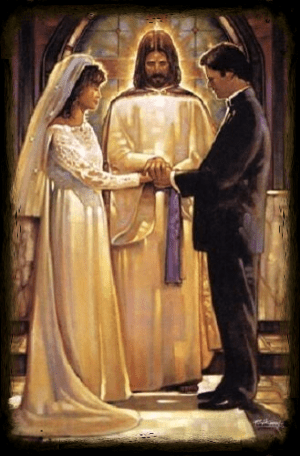
In the context of the Catholic sacrament of Holy Matrimony, the relevant texts collectively underscore the profound understanding that marriage is a sacred covenant established by God. This sacrament is not merely a contractual arrangement between two individuals; it encompasses a lifelong commitment that incorporates divine grace into the union. The Catholic Church teaches that through the sacrament of matrimony, grace is imparted to the couple, empowering them to fulfill their marital vows with faithfulness, love, and selflessness, thereby mirroring Christ’s unwavering love for the Church (cf. Eph 5:22-32).
The Church emphasizes that marriage is intended for the mutual benefit and sanctification of the spouses and serves essential purposes, including the procreation and education of children. This aligns with the fundamental understanding of marriage as presented in the creation narrative of Genesis 2, which illustrates the divine intention behind human relationships. In this scriptural account, marriage is instituted by God, designed to promote companionship, support, and intimacy between the spouses.
Moreover, the Gospel texts reinforce and deepen this understanding by illustrating the enduring nature of marriage as a sacred union characterized by love, fidelity, and openness to life. The teachings of Jesus in the Gospels further affirm the indissolubility of marriage, highlighting that what God has joined together, no one should separate. Ultimately, within the Catholic tradition, marriage is a grace-filled sacrament that not only binds two individuals together but also invites them into a transformative relationship with God, enriching their lives and those of their families through their shared commitment.
“‘For this reason shall a man leave father and mother and cleave to his wife and they shall be two in one flesh.’ To commend this unity he supplies an example of unity. Just as a man and a woman are one in nature so Christ and the Church are recognized as one through faith. ‘This is a great mystery–I mean in reference to Christ and the Church.’ He means that the great sign of this mystery is in the unity of man and woman….Just as a man forsakes his parents and cleaves to his wife, so too he forsakes every error and cleaves to the Church and subjects himself to her Head, which is Christ.”
Ambrosiaster, In Ephesians 5:31 (ante A.D. 384)
“And these are the nuptials of the Lord, so that like that great Sacrament they might become two in one flesh, Christ and the Church. From these nuptials a Christian people is born, when the Spirit of the Lord comes upon that people.”
Pacian, Sermon on Baptism, 6 (ante A.D. 392)
“It is certainly not fecundity only, the fruit of which consists of offspring, nor chastity only, whose bond is fidelity, but also a certain sacramental bond in marriage which is recommended to believers in wedlock. Accordingly it is en-joined by the apostle: ‘Husbands, love your wives, even as Christ also loved the Church.’ Of this bond the substance undoubtedly is this, that the man and the woman who are joined together in matrimony should remain inseparable as long as they live…”
Augustine, On Marriage and Concupiscence, 1,10[11] (A.D. 420)
PAX VOBISCUM
 Catholic Scripture
Leave a comment