
JUSTIFICATION
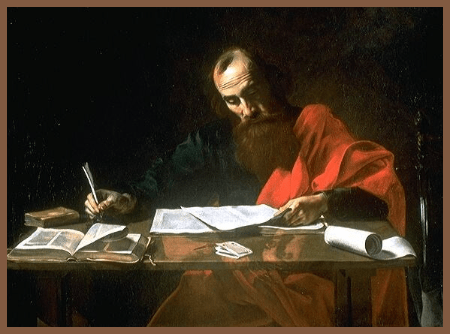
… There is no partiality with God. Judgment by the Interior Law. All who sin outside the law will also perish without reference to it, and all who sin under the law will be judged in accordance with it. For it is not those who hear the law who are just in the sight of God; rather, those who observe the law will be justified. For when the Gentiles who do not have the law by nature observe the prescriptions of the law, they are a law for themselves even though they do not have the law. They show that the demands of the law are written in their hearts, while their conscience also bears witness and their conflicting thoughts accuse or even defend them on the day when, according to my gospel, God will judge people’s hidden works through Christ Jesus.
Romans 2, 11-16
St. Paul’s Letter to the Romans 2:11-16 reflects significant themes in Catholic teaching, particularly regarding the relationship between law, sin, and divine judgment. The Apostle emphasizes that true righteousness is not determined by merely hearing the law but by actually obeying it. He asserts that those who follow the law will be justified, regardless of their background.
Paul also discusses how Gentiles, who do not have the law, can still act in accordance with it through their conscience, demonstrating that moral understanding is inherent in all people. Ultimately, he underscores that God will judge everyone impartially, based on their deeds, revealing the inner law written in their hearts.

Paul emphasizes that both those who sin without knowledge of the law (the Gentiles) and those who are aware of the law (the Jews) will face consequences for their actions. This indicates that accountability extends beyond mere knowledge of the law; rather, it pertains to one’s actions and adherence to moral principles. The distinction made between hearing the law and observing it underlines a core Catholic belief that justification before God comes through living out the law’s demands, not merely through intellectual acknowledgment. This aligns with the Catholic understanding of faith and works, where grace received through faith is expressed through actions.
The reference to Gentiles who “by nature” observe the prescriptions of the law suggests the concept of natural law, which holds that certain moral truths are inherent in human beings, accessible through reason. This idea is significant within Catholic teaching, as it supports the notion that all people have an innate understanding of right and wrong, regardless of their knowledge of specific religious laws or beliefs.

Paul addresses the role of conscience, indicating that God has instilled an internal witness in every person. The Catholic Church teaches that a well-formed conscience is crucial for moral decision-making. The idea that people’s thoughts can either accuse or defend them highlights the importance of living authentically according to one’s moral understanding.
Finally, the assertion that God will judge hidden works through Christ Jesus underscores the belief in a personal and just God who sees beyond external actions to the intentions and truths of the heart. This belief serves as a call to integrity and authenticity in one’s life, encouraging individuals to strive for holiness. This passage invites all Christians to reflect on their understanding of law, morality, and divine justice, urging them to live out their faith through actions that are consistent with both the moral law of God and the natural moral order.
“Now for the commission of sin we get no help from God; but we are not able to do justly, and to fulfill the law of righteousness in every part thereof, except we are helped by God. For as the bodily eye is not helped by the light to turn away there from shut or averted, but is helped by it to see, and cannot see at all unless it help it; so God, who is the light of the inner man, helps our mental sight, in order that we may do some good, not according to our own, but according to His righteousness.”
St. Augustine of Hippo (A.D. 411)
On Forgiveness of Sins and Baptism, II:5
PAX VOBISCUM
 Catholic Scripture
Leave a comment