
JUSTIFICATION & SANCTIFICATION
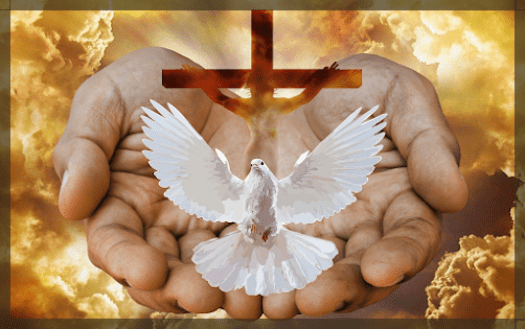
And such some of you were; but you are washed, but you are sanctified,
but you are justified in the name of our Lord Jesus Christ,
and the Spirit of our God.
1 Corinthians 6, 11
The passage from 1 Corinthians 6:11 highlights a transformative journey for believers, emphasizing the concepts of being washed, sanctified, and justified in the name of Jesus Christ. In the context of Catholic teaching, this text can be closely linked to the sacrament of Baptism, which plays a central role in the spiritual life of a Catholic.
In Catholic theology, Baptism is referred to as the sacrament of initiation that cleanses a person from original sin. This “washing” symbolizes the purification of the soul and the beginning of a new life in Christ. The act of baptism is not only a physical washing with water but also a spiritual renewal, wherein the individual is cleansed from sin and reborn into the family of God.

Sanctification refers to the process of being made holy. Through Baptism, Catholics believe that individuals receive the grace of the Holy Spirit, which empowers them to live a life in accordance with God’s will. This grace is crucial for the journey of sanctification, guiding believers toward a more profound union with God and helping them to grow in virtue and holiness throughout their lives. On the other hand, justification in Catholic teaching refers to being made righteous in the sight of God. Baptism plays a key role in this process, as it not only forgives sin but also grants the baptized a share in the divine life of God. This justification is not a one-time event but an ongoing process that involves cooperation with God’s grace through faith and good works.
Overall, this verse encapsulates the core beliefs of Catholic teaching regarding Baptism, where individuals are transformed and set on a path of holiness and righteousness through the grace bestowed upon them. The reference to the name of Jesus Christ and the Spirit of God underscores the Trinitarian aspect of Baptism, affirming that it is through Christ and the Holy Spirit that believers are initiated into the Church and empowered for their Christian journey.
St. Paul often uses the terms justification and sanctification interchangeably, suggesting a close relationship between the two concepts (Heb 13:12; Rom 5:9; 2 Thess 2:13; 1 Cor 6:11). To gain a deeper understanding of how justification and sanctification coexist in the apostle’s theology, it’s helpful to examine the metaphysical framework proposed by the ancient Greek philosopher Aristotle. He introduced the idea of four causes that explain the existence of all created things: efficient, material, formal, and final causes. In this context, formal causality is particularly relevant, especially in light of the Council of Trent’s definition of sanctification as “the single formal cause (causa formalis) of justification.” This definition highlights the role of sanctification in the instrumental application of redemption. As articulated in the Decree on Justification: Chapter 7, the single formal cause is identified as the justice of God, not in terms of His inherent righteousness, but as the means by which He makes us just. Through this divine justice, we are endowed and renewed in the spirit of our minds.
The formal cause of any entity encompasses the elements that define its conception or identity, representing the idea of a formative principle interacting with physical matter. In essence, every object or being is made up of both matter and form. The form serves as a determining principle that defines the characteristics of the object, whether it’s an oak tree or the concept of justification. Furthermore, the substantial form is responsible for identifying the species or category to which the entity belongs, helping to differentiate it within a broader classification.

Justification is a crucial concept in the context of God’s design, and it cannot fully realize its intended purpose without the principle of sanctity. Both justification and sanctification rely on the principle of efficient causality, which involves an agency enacting a change for a specific purpose. In this framework, grace bestowed by God serves as the material cause, while Divine favor and Divine persuasion, facilitated by the Holy Spirit, represent the efficient cause. The Holy Spirit justifies individuals through His sanctifying grace, which serves as the formal cause. Consequently, justification and sanctification are interconnected outcomes of the Divine initiative, functioning together like two facets of a single entity—redemption. As such, neither can effectively exist in isolation within the overarching Divine plan of redemption.
The relationship between forgiveness and sanctification is crucial in understanding the process of justification before God. Initially, one must receive the grace of forgiveness to be justified; without this grace, the process of sanctification through regeneration holds little relevance. Sanctification, in turn, is essential because it prepares individuals for justification during God’s judgment of their souls. In philosophical terms, the “final cause” refers to the ultimate purpose of an action or process. Justification serves to liberate us from guilt in our relationship with God, ultimately leading to our predestination for glory. However, this process requires the key element of sanctity; without it, justification could not achieve its intended goal.

Moreover, it is emphasized that our own righteousness—distinct from the external righteousness attributed to Christ—must exceed that of the scribes and Pharisees. This standard is significant, as outlined in Matthew 5:20, which states that entering the kingdom of heaven is contingent upon our inherent righteousness, achieved through the efficacy of sanctifying grace that justifies the soul through the operation of the Holy Spirit who justifies us by no natural merit of our own but by the merits of Christ.
Hence, in Catholic theology, the Holy Spirit plays a crucial role in the justification of the human soul. Justification is understood as the process by which a person is made righteous in the sight of God, primarily through God’s grace. The Holy Spirit is seen as the agent of this grace, working within individuals to transform their hearts and minds. Through the sacraments, especially baptism and confirmation, the Holy Spirit sanctifies believers, marking them as children of God and incorporating them into the body of Christ. During justification, the Holy Spirit enables a person to have faith in Jesus Christ and leads them to repentance. This grace moves the individual to turn away from sin and towards a life of virtue, reflecting the love and mercy of God. The process of justification is ongoing, with the Holy Spirit continually guiding and inspiring the believer to grow in holiness throughout their life.
“‘There is henceforth laid up for me,’ he says, ‘a crown of righteousness, which the Lord, the righteous Judge, shall give me at that day.’ Now, to whom should the righteous Judge award the crown, except to him on whom the merciful Father had bestowed grace? And how could the crown be one ‘of righteousness,’ unless the grace had preceded which ‘justifieth the ungodly’?”
St. Augustine, On Grace and Free Will, 6:14 (A.D. 427)
PAX VOBISCUM
 Catholic Scripture
Leave a comment