
THE SACRAMENT OF BAPTISM
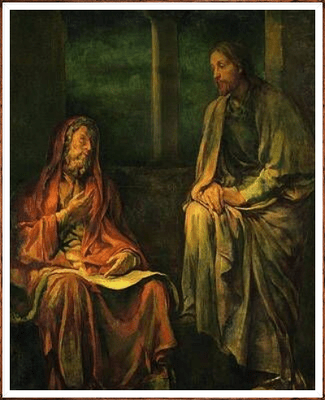
Jesus answered and said unto him, Verily, verily, I say unto thee,
Except a man be born again, he cannot see the kingdom of God…
Truly, truly, I say to you, Except a man be born of water and
of the Spirit, he cannot enter into the kingdom of God.
John 3, 3- 5
In the conversation that Jesus is having with Nicodemus, our Lord says to him, “Most assuredly, I say to you, unless one is born again, he cannot see the kingdom of God” (Jn 3:3). The Greek phrase often translated as “born again” (γεννηθῇ ἄνωθεν or gennatha anothen in the English transliteration) also occurs in V.7 in which Jesus says, “Do not marvel that I said to you, “You must be born again.” The Greek word anothen sometimes can be translated “again,” but in the New Testament, it most often means “from above” or “from heaven.” In the King James Version, which I am using, the only two times it is translated “again” are in John 3:3 and 3:7. Every other time it is given a different rendering. However, we have our mental equivalent in Vv.5-6, in which Jesus says, “Most assuredly, I say to you, unless one is born of water and the Spirit, he cannot enter the kingdom of God. That which is born of the flesh is flesh, and that which is born of the Spirit is spirit.”
Now, in V.3, our Lord declares that one must be “born again” to enter the kingdom of God, while in V.5, he reiterates more clearly that one must be “born of water and spirit” to enter the kingdom of God. Thus, the expression “born again” refers to the Sacrament of Baptism in water and Spirit, which is salvific. One who is born or reborn “of Spirit” is born “from above” or “from heaven.” Jesus does say on another occasion, “He who believes and is baptized will be saved” (Mk 16:16). One cannot enter the kingdom of heaven unless they are saved, and this requires not only belief in Jesus but also the sacrament of initiation that washes away the stain of original sin and marks a new life in the Spirit.
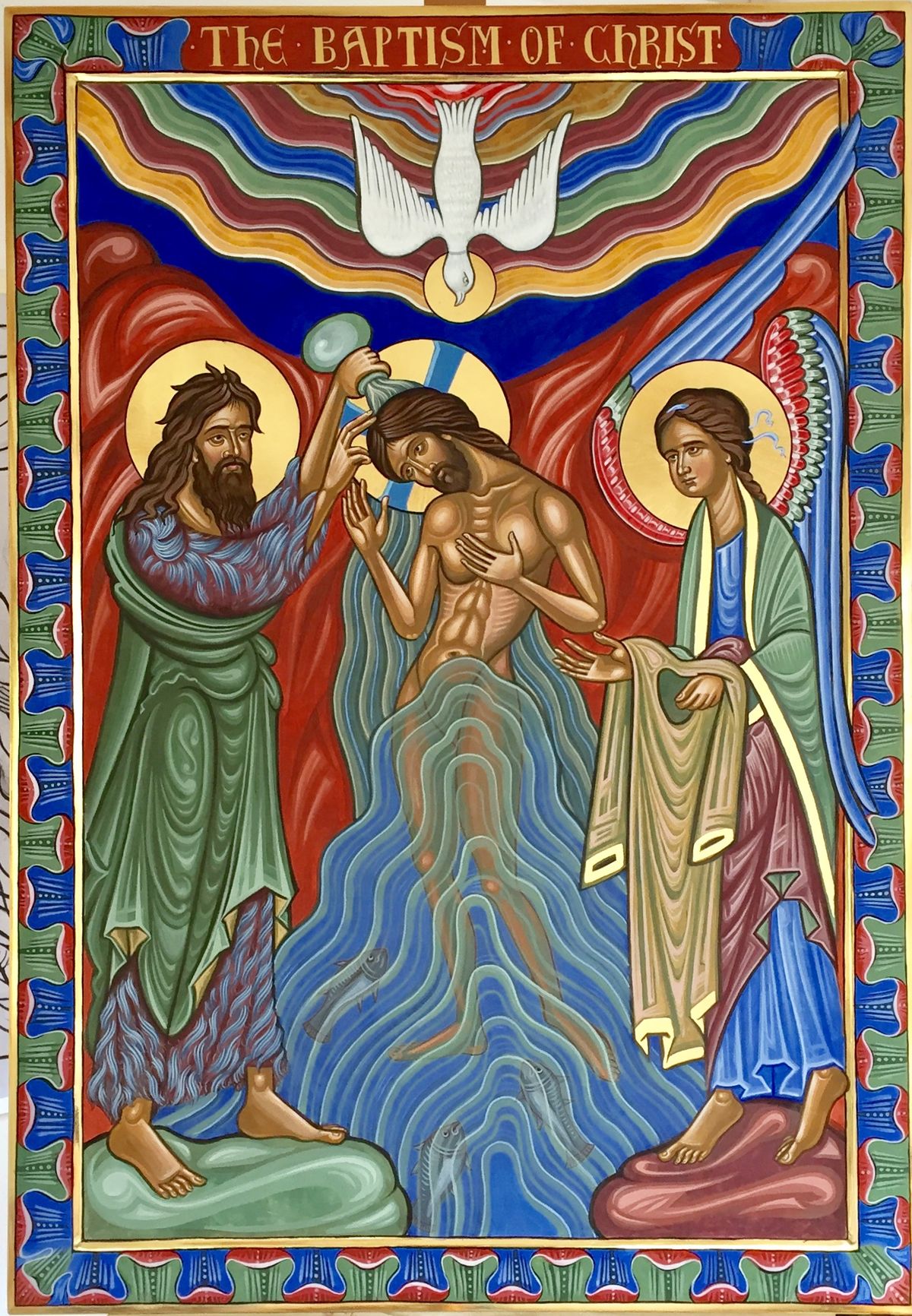
St. Paul describes the Sacrament of Baptism as a “washing of regeneration” that is “poured out on us” regarding water baptism. The original Greek verb for “washing” is loutron (λουτρόν), which generally refers to a ritual washing of purification (Titus 3:5-6). Paul also wrote, “Do you not know that all of us who have been baptized into Christ Jesus were baptized into his death? We were buried therefore with him by baptism into death so that as Christ was raised from the dead by the glory of the Father, we too might walk in newness of life” (Rom 6:3–4). Baptism unites us with Christ’s death and resurrection so that we might die to sin and receive new life.
In Colossians 2:11–13, the apostle tells us, “In [Christ] you were also circumcised, in the putting off of the sinful nature, not with a circumcision done by the hands of men but with the circumcision [of] Christ, having been buried with him in baptism and raised with him through your faith in the power of God.” These NT passages evoke the words Jesus spoke to Nicodemus: “That which is born of the flesh is flesh, that which is born of the Spirit is spirit.” Being born again is a movement from being a child of Adam to a child of God.
Soon after Paul had converted, he was told, “And now why do you wait? Rise and be baptized, and wash away your sins, calling on his name” (Acts 22:16). The “washing away” refers to water baptism. As a matter of fact, Ananias’ phrase “wash away” comes from the Greek word apolouo (ἀπολούω) Apolouo means an actual cleansing that removes sin. It is not a symbolic covering up of sin. Paul’s faith in Jesus wasn’t enough to save him. He also had to be baptized to have his sins forgiven or “blotted out” and to receive the Holy Spirit who justifies us in our collaboration with Him. So, baptism is necessary for our salvation and isn’t merely a symbolic ritual that serves as a testimony of faith. In fact, Paul says we are “washed, sanctified, and justified” in the name of the Lord Jesus about water baptism. The “washing” of baptism gives birth to sanctification and justification, which proves baptism is not just symbolic (1 Cor 6:11).
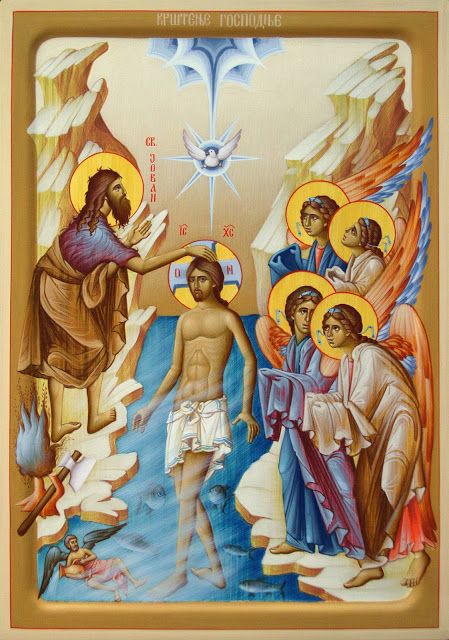
In Acts 2:38, Peter tells us, “Repent and be baptized every one of you in the name of Jesus Christ for the forgiveness of your sins, and you shall receive the gift of the Holy Spirit” (Acts 2:38). We must not only repent but also be baptized for the forgiveness of sin so that we receive the graces and gifts of the Holy Spirit for a new life with God. Simply believing in Jesus and accepting him as our personal Lord and Savior won’t regenerate us. We are saved by grace through faith (Eph 2:8). Jesus suffered and died to expiate sin, but he also merited for us the dispensation of divine grace.
Indeed, many passages in the Old Testament foreshadow the regenerative power of baptism by water and the Holy Spirit. For instance, Naaman took seven dips in the Jordan and, as a result, his flesh was restored like a child’s (2 Kings 5:14). Being born again is a restorative experience of the heart and mind of the human soul through the power of the Holy Spirit. Isaiah prophesies that the time is coming when the Lord pours out His water and His Spirit, which refers to the institution of the Sacrament of Baptism by Christ our Lord. Water and Spirit are always joined in the Scriptures. We are cleansed and regenerated by the Holy Spirit, who moves through the water. Ezekiel (36:25-27) concurs that the Lord will sprinkle us with water to cleanse us from our sin and give us a new heart of flesh and spirit. We must be born again or from above if we hope to be saved.
” ‘And dipped himself,’ says [the Scripture], ‘seven times in Jordan.’ It was not for
nothing that Naaman of old, when suffering from leprosy, was purified upon his
being baptized, but it served as an indication to us. For as we are lepers in sin, we are
made clean, by means of the sacred water and the invocation of the Lord, from our
old transgressions; being spiritually regenerated as new-born babes, even as the
Lord has declared: ‘Except a man be born again through water and the Spirit, he
shall not enter into the kingdom of heaven.’”
St. Irenaeus, Fragment, 34
(A.D. 190)

PAX VOBISCUM
 Catholic Scripture
Leave a comment